


The milk routine decides this Breville Bambino vs Bambino Plus comparison. The BES450 asks you to steam by hand. The BES500 adds automatic milk settings and retains a manual option. Both still leave coffee preparation to the user. Choose the milk task you want help with, then account for the coffee equipment that stays separate.
The Breville Bambino vs Bambino Plus decision comes down to milk work. Choose the Bambino to steam by hand. Choose the Plus for its automatic milk settings. Both still need coffee preparation and a separate grinder for a whole-bean single-wall setup. Check the exact supplied kit before adding tools for the routine you choose.
Breville Bambino BES450
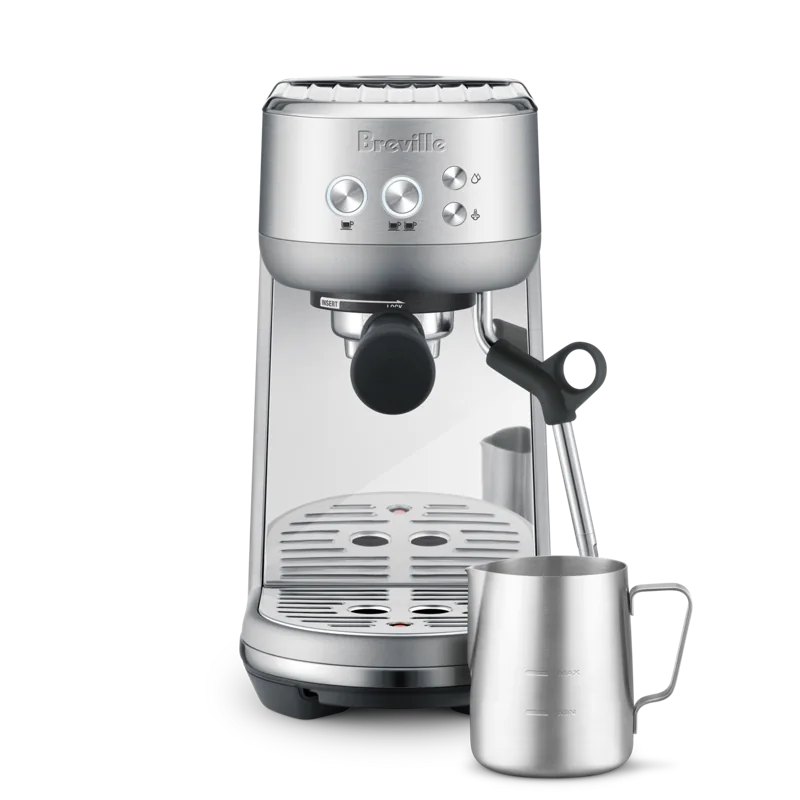
Breville Bambino BES450 Breville Bambino BES450
Our verdict:
For manual milk work
Choose the BES450 for its manual milk process and separate coffee preparation. Follow the supplied basket route before adding tools.
Keep in mind: It has no automatic milk heat or texture settings. Whole beans need a suitable separate grinder.
New US offer below $500 before tax and shipping; checked 31 October 2026.
View at BrevilleBreville Bambino Plus BES500
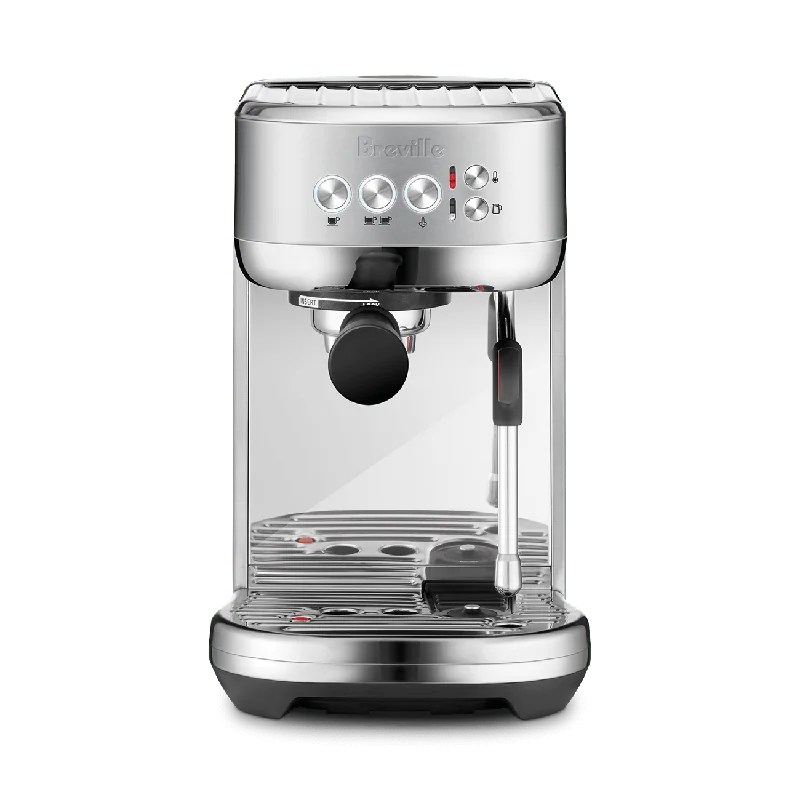
Breville Bambino Plus BES500 Breville Bambino Plus BES500
Our verdict:
For automatic milk settings
Choose the BES500 when its milk heat and texture settings address the work you want help with. Coffee preparation and cleaning remain part of the routine.
Keep in mind: It does not grind or prepare the coffee. Automatic milk settings still need a prepared jug and wand cleanup.
New US offer below $500 before tax and shipping; checked 31 October 2026.
View at BrevilleBreville Bambino vs Bambino Plus: the jobs side by side
The names are close, but the milk controls differ. Use BES450 for the standard Bambino and BES500 for the Plus when you check an offer. A listing that drops the model code deserves another look. Do not borrow a feature from one manual to fill a gap in the other.
Use the controls to choose the work you want to do. A milk setting addresses one stage of the drink, while coffee preparation and wand care remain separate. Keep those tasks together when deciding which stock routine fits your household.
Begin with the drinks you make most
For straight espresso, the Plus's automatic milk settings do not take part in the drink. You still prepare coffee and use the shot controls. Someone who seldom adds milk should have a specific reason for choosing the Plus beyond its name.
For a regular latte routine, consider which part you want to learn. With the standard Bambino, you hold and position the jug while steaming. You take part in how the air enters and the milk moves. That can suit a buyer who wants to practise the skill.
The Plus offers a different starting point. You choose its milk settings and place the jug as directed. The automatic cycle takes over part of that task. It can suit a household where milk work is a hurdle to making drinks. It does not remove the need to fill the jug or clean the wand.
For iced lattes, decide whether you need to heat milk at all. If your recipe combines espresso, cold milk and ice, automatic steaming may not solve a task you have. If you also want hot drinks, compare that second routine on its own. Do not buy a feature for a drink you do not plan to make.
For an Americano, check the water route in the exact manual. Milk settings again do not decide the drink. Cup space, water handling and your coffee preparation may matter more. A comparison based on the word Plus alone misses those needs.
Automatic milk still has a starting procedure
The BES500 manual shows how to prepare and place the milk jug. The chosen heat and texture settings are part of that process. They do not make any jug, fill level or wand position suitable. Read those steps before buying a replacement jug.
The machine also needs room for the end of the cycle. The manual describes a purge when the wand returns to its lowered position. Keep clear of the discharge and keep the tray in place. Leave space to move the jug without reaching across hot parts.
Wiping the outside of the wand is still a user task. An automatic purge does not prove that every milk trace has gone. Clean the parts in the way the manual describes. The task shifts from controlling the whole steaming step to setting it up and finishing it correctly.
If several people share the Plus, agree on how they leave the milk area. A filled tray or dirty wand affects the next user even if the preferred settings are stored. The purchase can reduce one task while leaving a shared care routine in place.
The Plus also supports manual steaming. That matters if you want automatic help now and a manual option later. Follow the directions for the mode you choose, including the jug arrangement and care after use. Changing the milk mode does not prepare the coffee basket or choose its contents for you.
Manual milk is a reason to choose the standard Bambino
The BES450's manual process is worth choosing on purpose. You can focus on jug position and the changes you see as you steam. Expect to spend time learning that separate task. The coffee side and the milk side do not become one skill simply because they share a machine.
A useful way to decide is to describe the job in plain words. If you want to learn to steam milk, manual control fits that aim. If you want the machine to handle selected milk settings, the standard Bambino does not provide the Plus's automatic cycle.
Do not treat that difference as proof of a cup-quality ranking. More user control alone does not prove a better drink. More automation is not proof of a worse one. A control can only help when it suits the person and the drink being made.
The standard Bambino still needs the prescribed purge and cleaning steps. Manual steaming does not mean that every care action is optional or improvised. Keep the BES450 instructions with the machine. Button steps from a BES500 video may refer to another function.
Both models leave the grinder decision open
Neither machine contains a grinder. That fact has a direct effect on a whole-bean setup. Before choosing between the two, write down which grinder will prepare the coffee. If you do not own a suitable one, it is still a required part of that route.
Breville's US books distinguish single-wall and dual-wall baskets. They direct fresh-ground and pre-ground coffee to the relevant basket. Match that choice to your starting equipment. Buying a single-wall basket does not turn an unsuitable grinder into an espresso grinder.
Someone starting with suitable pre-ground coffee may have a shorter equipment list. That route still needs the basket and preparation steps in the manual. It does not promise that every bag labelled espresso will suit the machine in the same way.
If you already own an espresso grinder, check its range and adjustment controls before treating that part as settled. A grinder's ability to produce fine coffee is only part of the question. You need to be able to adjust the recipe in useful steps.
Keep this decision apart from milk automation. The Plus can help with milk while leaving the same need to prepare the coffee. A buyer who needs a built-in grinder should consider another machine category rather than expecting either Bambino to provide one.
Breville Bambino vs Bambino Plus: compare the kit
Read the included-components list for the exact offer. Breville's manuals show the accessories used with each model, but retail bundles can differ. A seller's general photograph is not a complete packing list. Resolve a missing required part before the order.
Make a short list for your drink route: handle, correct basket, tamper, milk jug if needed, and the chosen coffee or grinder. Then compare it with the offered kit. Put optional tools on a separate list. A distribution tool or another handle need not be a starting requirement.
The BES500 manual includes a dose-trimming tool among its accessories. That is a concrete kit distinction to check. It is not a reason to assume that every tool shown for the Plus also comes with the standard machine.
Both models use a nominal 54 mm portafilter system. That shared size helps with a parts search. It does not prove that every third-party part fits both models. Tabs, rims, depth and clearances still need an exact check.
If you already own accessories, compare part codes rather than photographs. A familiar-looking basket can have a different rim or depth. Keep the original parts until the new ones have passed the maker's fit check. Never force a handle to make it seem compatible.
Space means more than the width of the case
Measure the space in which you will make drinks. A narrow machine may still need room for a grinder, jug, knock box or drying area. Those items do not fit inside the case dimensions. Check how you will move from the preparation area to brewing, then to the sink.
Tank access is another working-space check. You need to reach and refill the tank in the position where the machine will stand. A machine that fits below a cupboard may still be awkward to fill there. Check the removal route before committing the counter space.
For the Plus, allow room to lift the jug and lower the wand as directed. For the standard Bambino, allow space to hold and move the jug during steaming. The two milk routines use the area differently. Do not infer either working envelope from a front-on product photo.
Check your cup and scale together under the spouts if you plan to weigh drink output. An espresso cup fitting on its own does not settle the height of that stack. A tall latte glass can create a different problem. Measure the equipment you intend to use.
You also need to remove the tray. Give it a safe route to the sink without moving hot cups or balancing it over another appliance. The final counter layout should make ordinary care easy enough to do after every session.
Heating claims do not time your whole breakfast
Breville describes the heating system in each machine's product material. A heater ready-state claim is not a measured time from a cold kitchen to a finished latte. The user still has to fill the tank and prepare the coffee. Milk work and cleanup also take time.
The Plus's automatic milk routine also does not start with beans and an empty cup. You still prepare the shot and the milk. The standard Bambino's manual routine depends in part on the user's actions. Include preparation and care when planning the whole drink, rather than using a heater-ready claim for the entire routine.
If time is your main concern, walk through your own intended order of tasks. Include every drink in the household, not just the first shot. Note when you would grind, brew, steam, rinse and empty the tray. That exercise is more useful than inventing a speed score from a heater label.
Use each manual's ready indicators and operating sequence in practice. Do not transfer a timing instruction between the two models because both names contain Bambino. The instructions for first use also differ in purpose from the daily drink routine.
A shared kitchen can need both milk modes
Suppose two people use the same machine. One wants help with milk settings before work. The other likes holding the jug and working with the wand. The Plus gives them an automatic route and a manual option on the same BES500. That is a reason to consider it even if one user expects to steam by hand.
The standard BES450 does not offer that same choice of milk modes. Both people would use its manual process. It may still fit the household if that is work both want to do. Do not choose the Plus just because two people share a kitchen; choose it when its extra milk controls address a real preference.
The shared routine also needs a place for the jug and a clear handover after milk work. A second person should not have to guess whether the wand needs wiping or the tray needs attention. Automatic settings do not remove those jobs from the person finishing the drink.
Talk through the process each person wants before comparing optional parts. If both want manual milk, an extra milk mode may have little value to them. If only one wants manual milk, the Plus's manual option matters to the comparison. Neither scenario establishes a taste or speed advantage.
Choose the milk routine before buying
Use the milk-texturing steps in the BES450 instruction book to picture the standard model's manual routine. Then read the automatic and manual options in the BES500 instruction book. Choose the routine that fits the people making drinks, including the wiping and cleaning they still need to do afterward.
Choose the standard model when manual milk work is a task you want to keep. The Plus fits when automatic milk settings address the stage where you want help. Then check the exact kit for your coffee route. A clear reason to use those controls is more useful than choosing by the family name alone.
The full Bambino review covers its coffee and care steps. The Bambino Plus guide focuses on its milk settings and kit. Read the one that matches the routine you want before opening the exact offer.
Frequently asked questions
Is milk steaming automatic on the standard Bambino?
The BES450 US manual describes manual milk texturing. The user positions the wand and jug. The automatic heat and texture settings discussed here belong to the Bambino Plus BES500. Check the model code when an offer uses the Bambino name loosely.
Can the Bambino Plus also steam by hand?
Yes. The BES500 manual describes a manual option as well as automatic milk texturing. Follow its instructions for the mode in use. You still prepare the jug and complete the wand's care routine. Changing milk modes does not change which coffee basket you need for the coffee you are using.
Do I need an espresso grinder with either machine?
For a whole-bean single-wall setup, plan a suitable separate grinder. The US books also describe a dual-wall route for suitable pre-ground coffee. Decide which route you will use before treating the equipment list as complete.
Should a black-coffee drinker choose the Plus?
The automatic milk settings do not take part in straight espresso. A black-coffee buyer should identify another needed feature or kit difference before choosing the Plus. Its name alone does not establish a benefit for that routine.
Does automatic milk remove cleaning work?
No. The Plus still needs the jug prepared correctly and the wand wiped. Follow its automatic purge and care steps. A purge does not prove that dried milk has gone from every outside surface.
Verdict
The Breville Bambino vs Bambino Plus decision comes down to milk work. Choose the Bambino to steam by hand. Choose the Plus for its automatic milk settings. Both still need coffee preparation and a separate grinder for a whole-bean single-wall setup. Check the exact supplied kit before adding tools for the routine you choose.