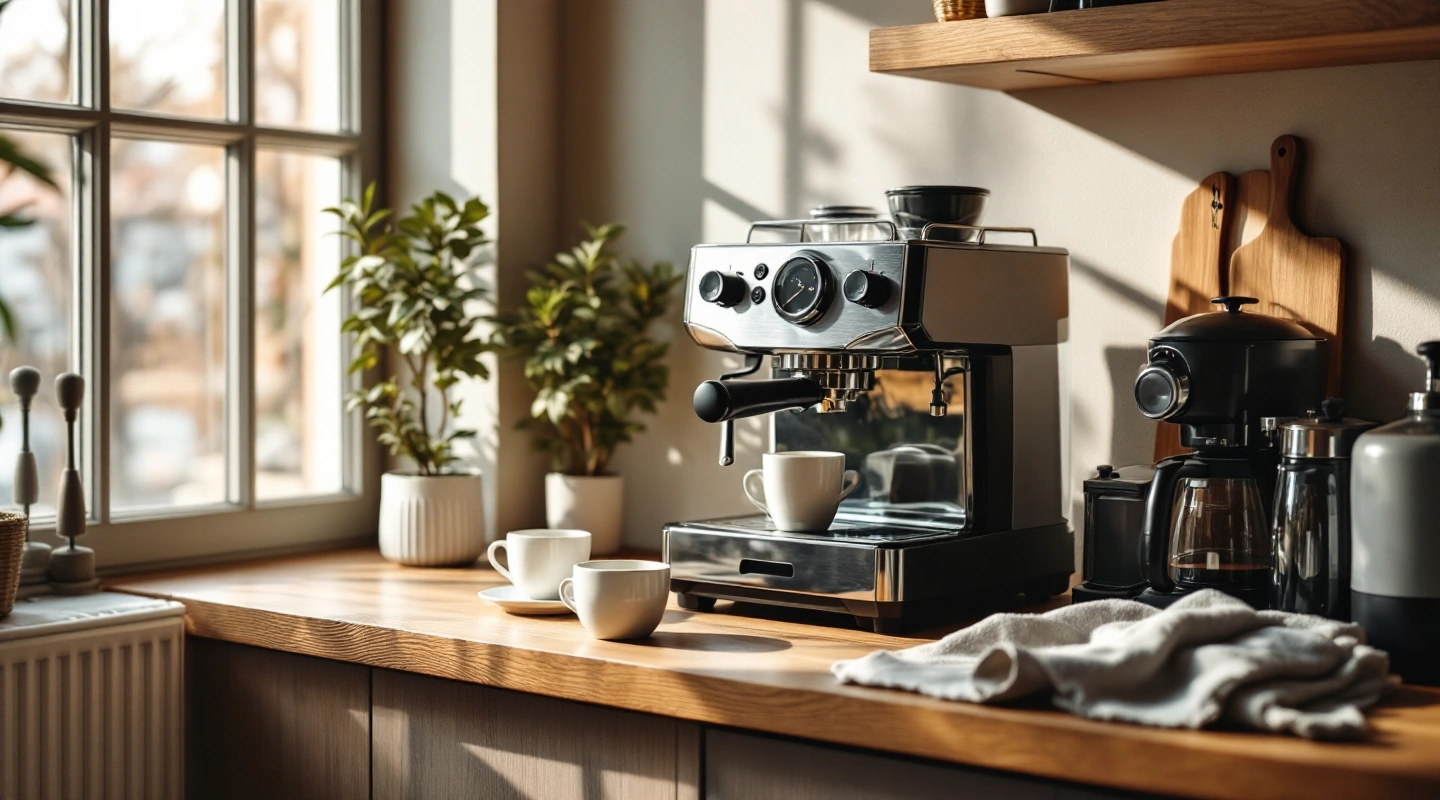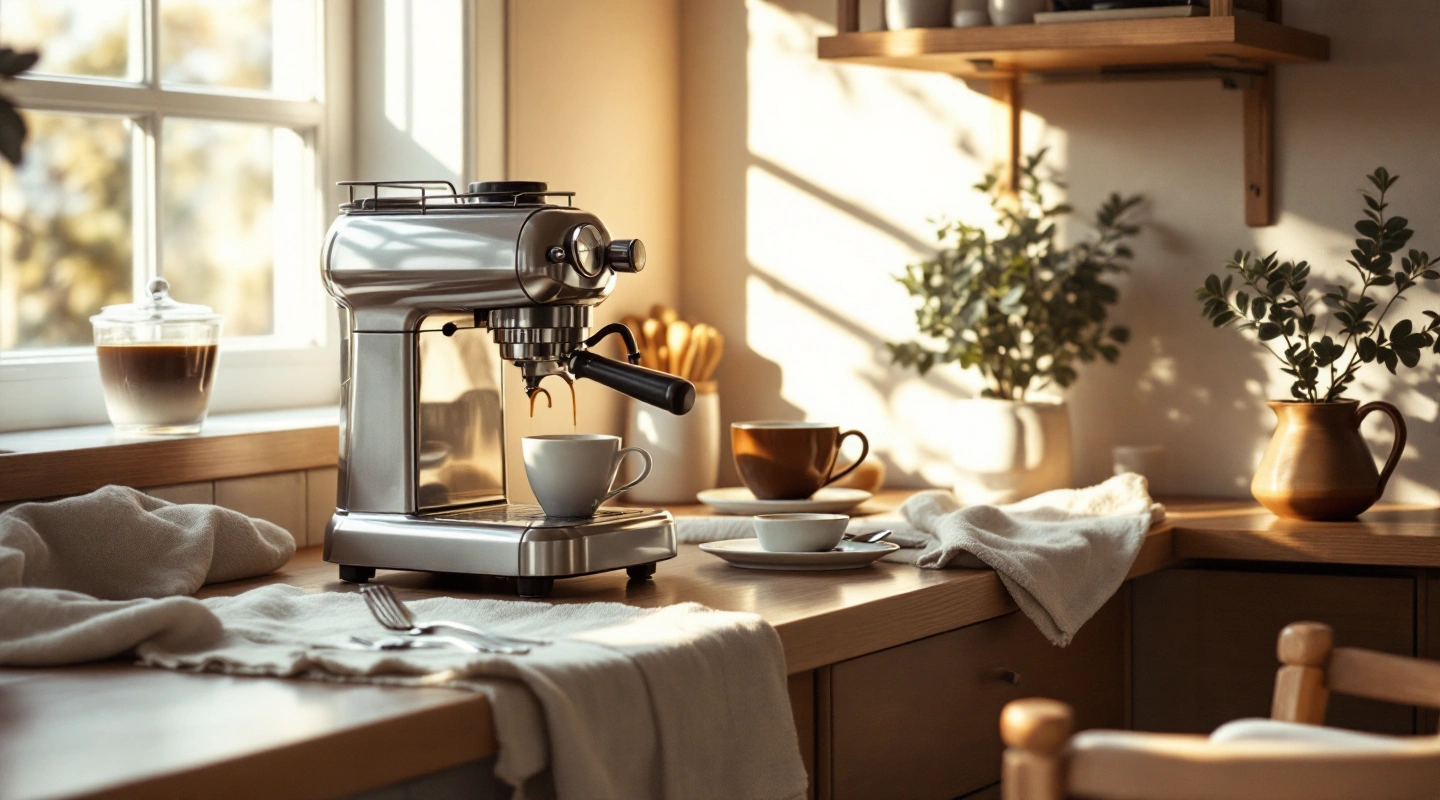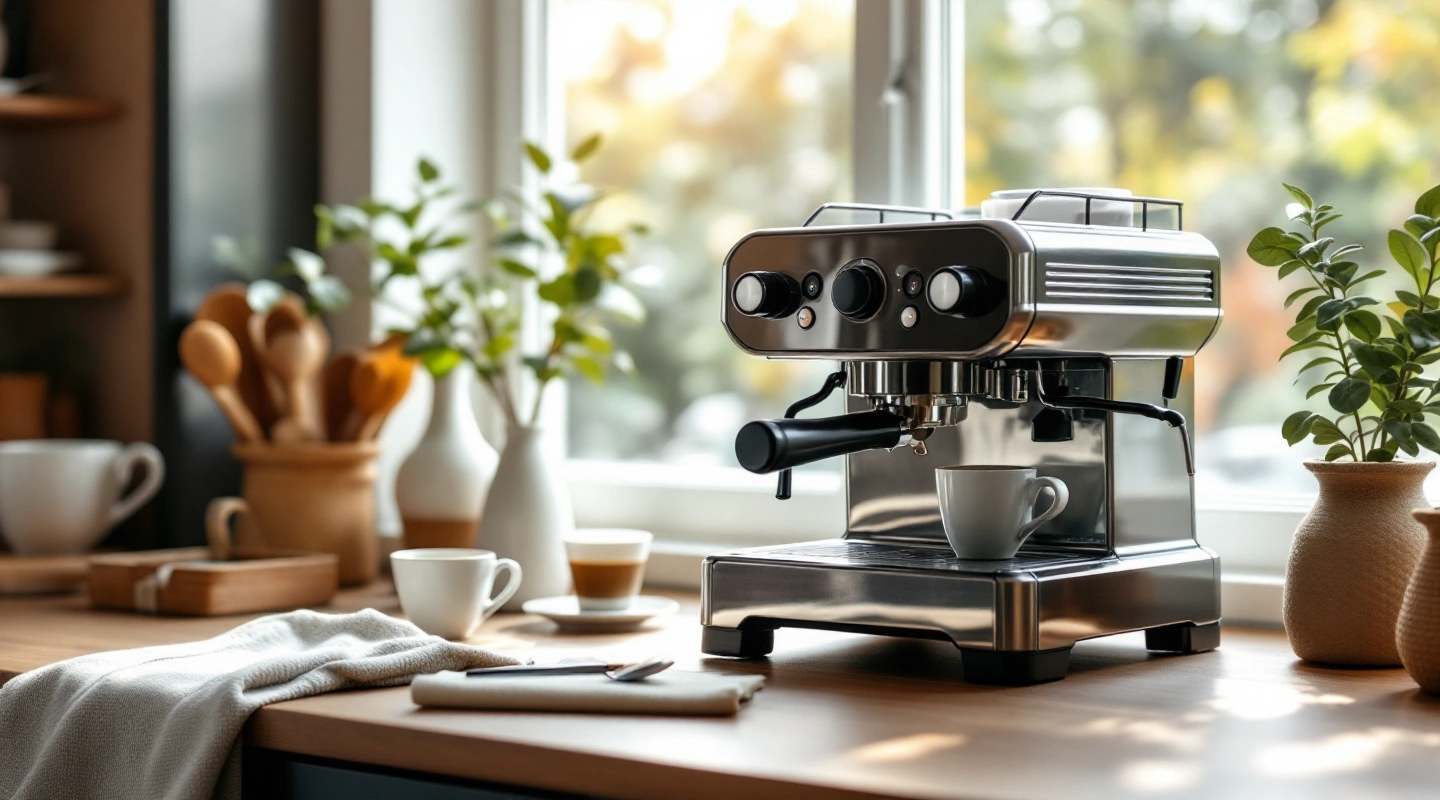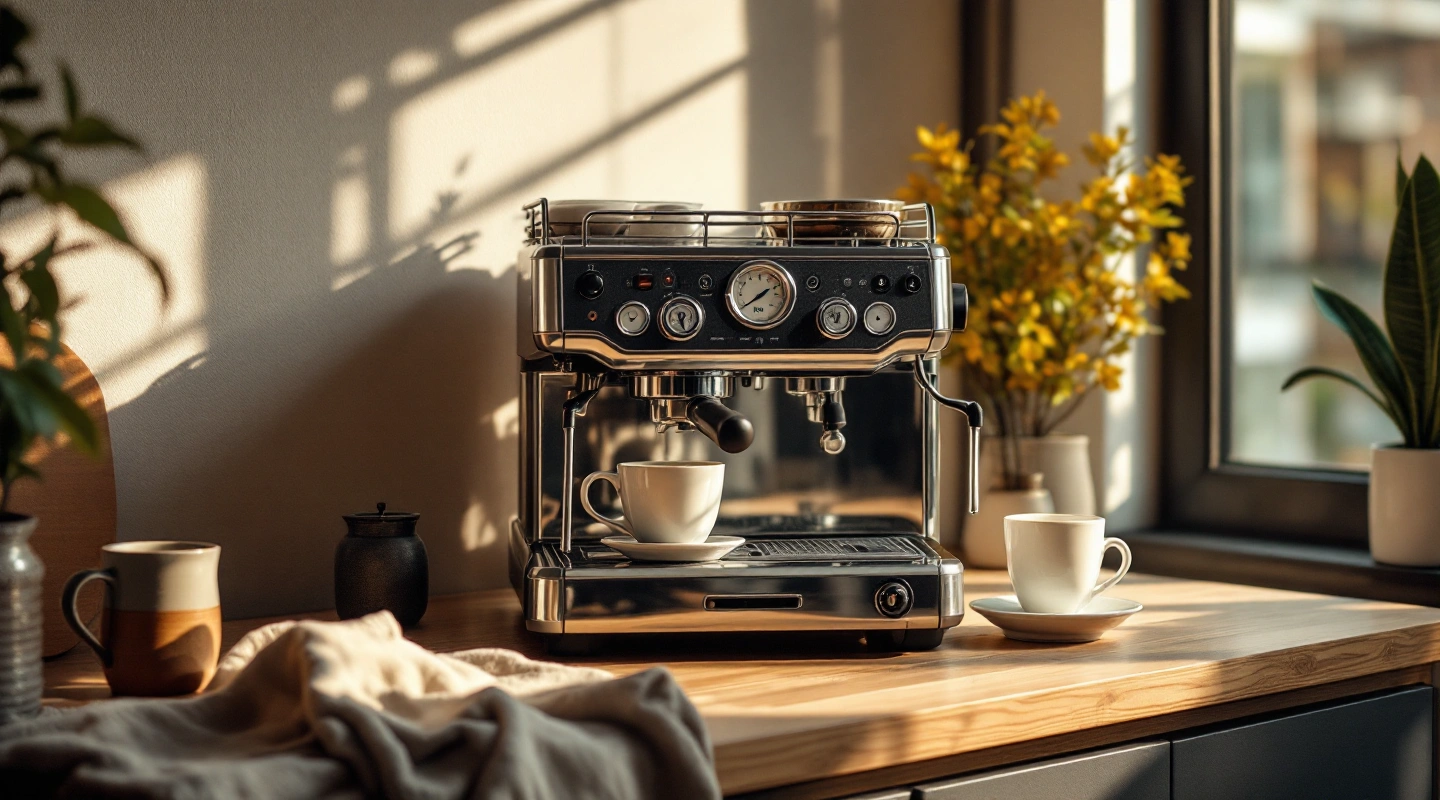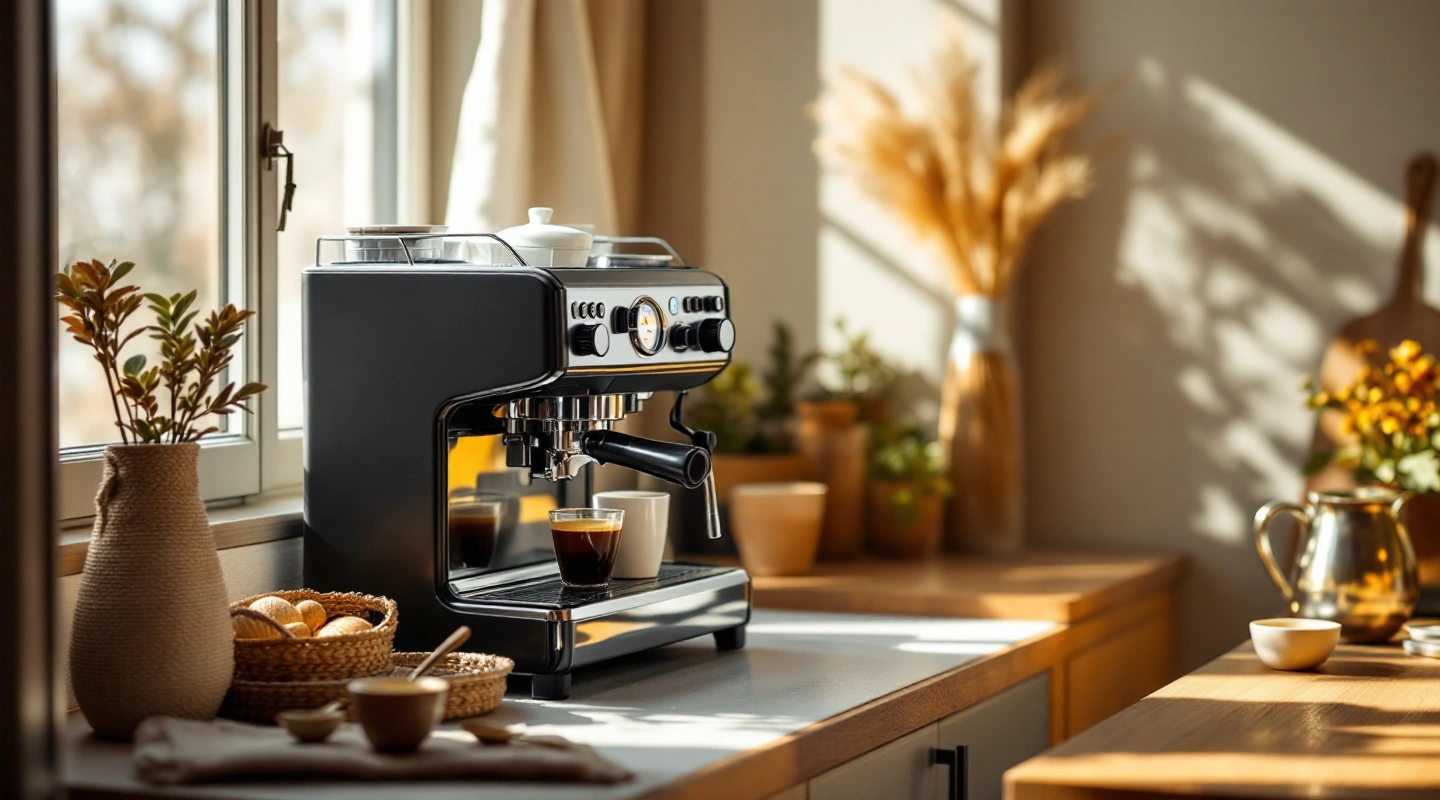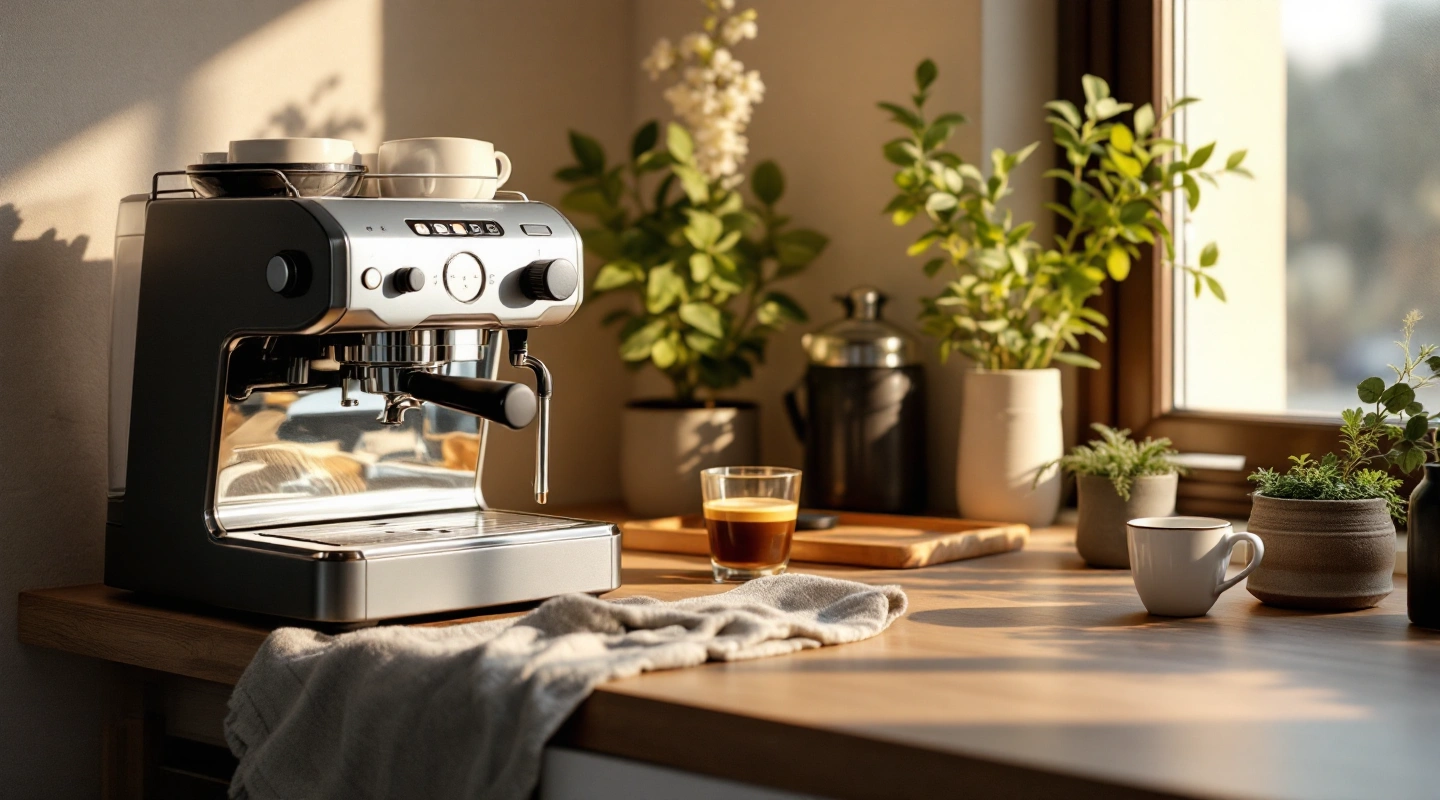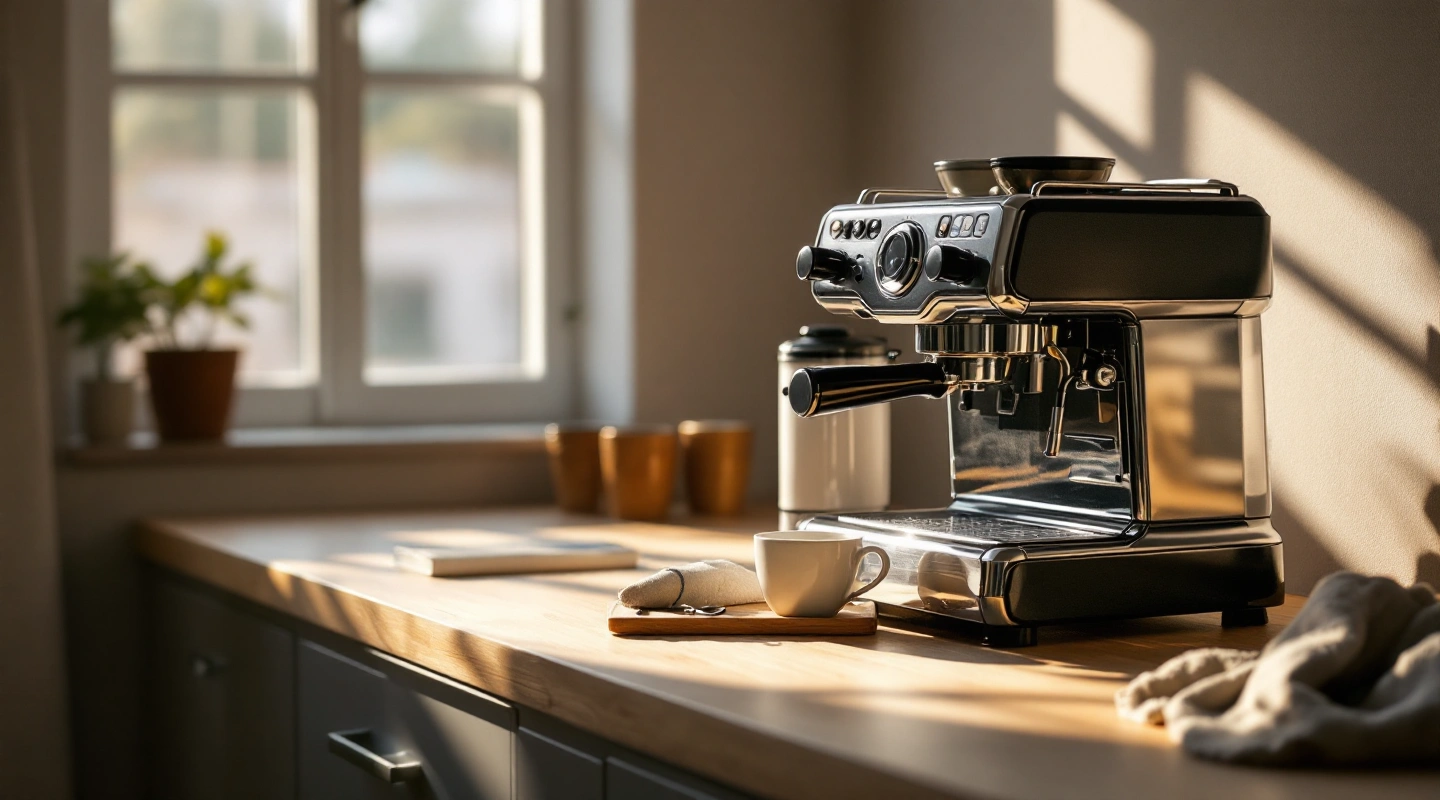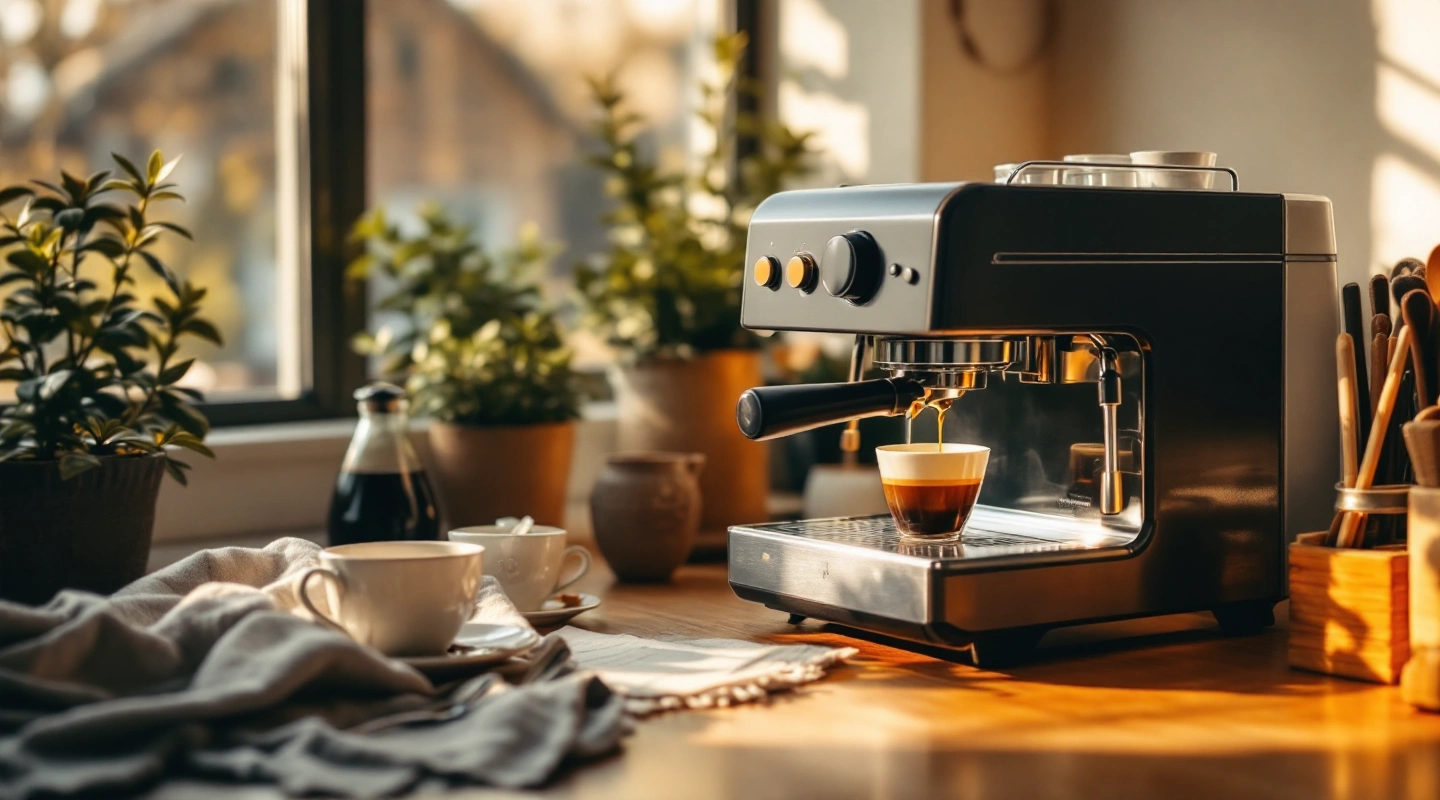
Choose a semi automatic espresso machine by the tasks you want help with. Shot buttons can end delivery while milk work stays manual. Milk settings add help at a different stage. Compare the Bambino's button routine, the Maestro Plus's milk modes and the Stilosa's coffee dial. Choose the controls for your drinks and the work you want to do.
#1. Breville Bambino BES450
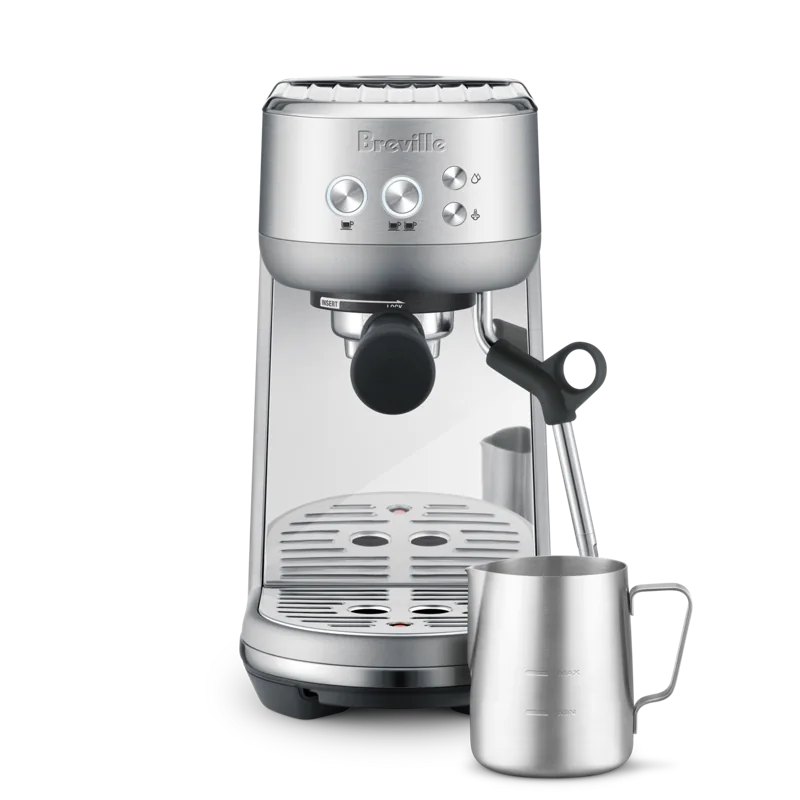
Breville Bambino BES450 Breville Bambino BES450
Our verdict:
For manual milk work
Choose the BES450 for its manual milk process and separate coffee preparation. Follow the supplied basket route before adding tools.
Keep in mind: It has no automatic milk heat or texture settings. Whole beans need a suitable separate grinder.
New US offer below $500 before tax and shipping; checked 31 October 2026.
View at Breville#2. DeLonghi Dedica Maestro Plus EC950M
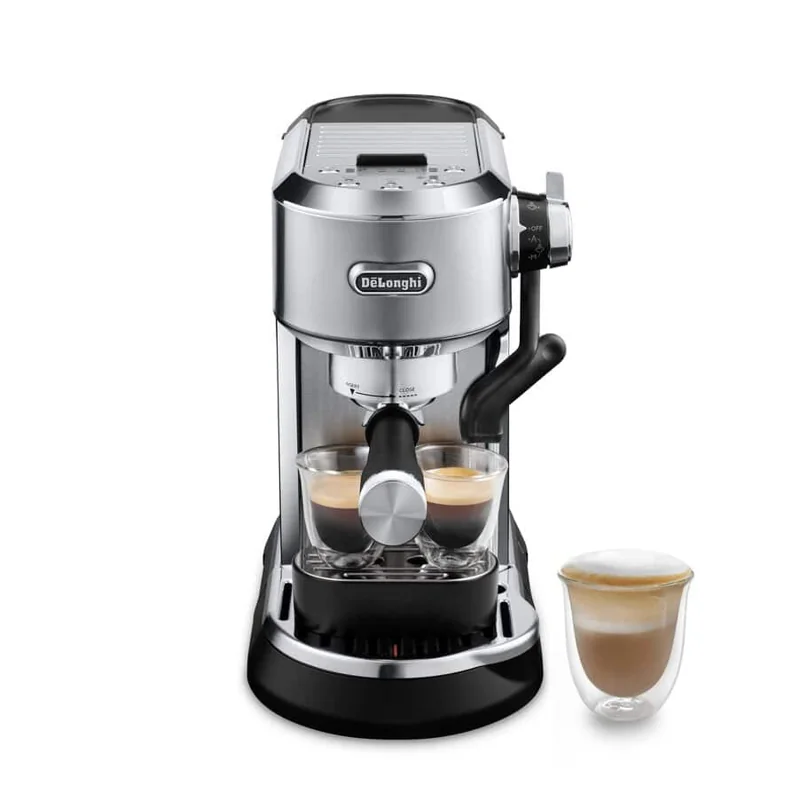
DeLonghi Dedica Maestro Plus EC950M DeLonghi Dedica Maestro Plus EC950M
Our verdict:
For automatic milk
Choose it for automatic milk help with a manual option. Coffee preparation and cleanup stay in the routine.
Keep in mind: Automatic milk controls do not apply in manual mode. Whole beans need a separate grinder.
New US offer below $500 before tax and shipping; checked 31 October 2026.
View at De’Longhi#3. DeLonghi Stilosa EC260BK
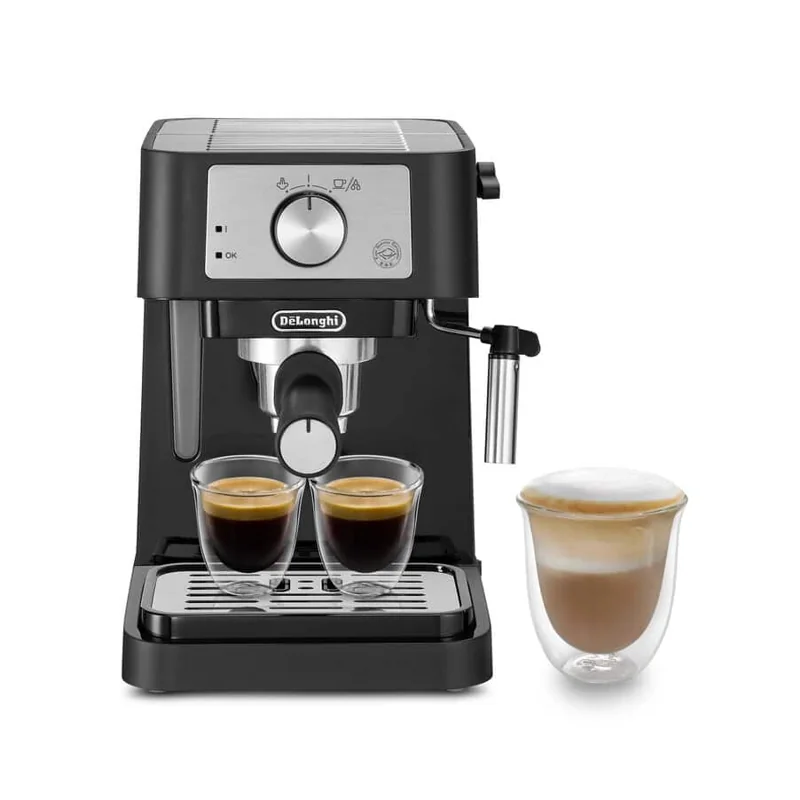
DeLonghi Stilosa EC260BK DeLonghi Stilosa EC260BK
Our verdict:
For manual coffee
Choose the Stilosa for its documented manual coffee and milk routine. Plan the basket route and required extras before buying.
Keep in mind: It needs a cooling step after steam before coffee. Whole beans need a suitable separate grinder.
New US offer below $500 before tax and shipping; checked 31 October 2026.
View at De’Longhi#4. HiBREW H10A (US, silver)
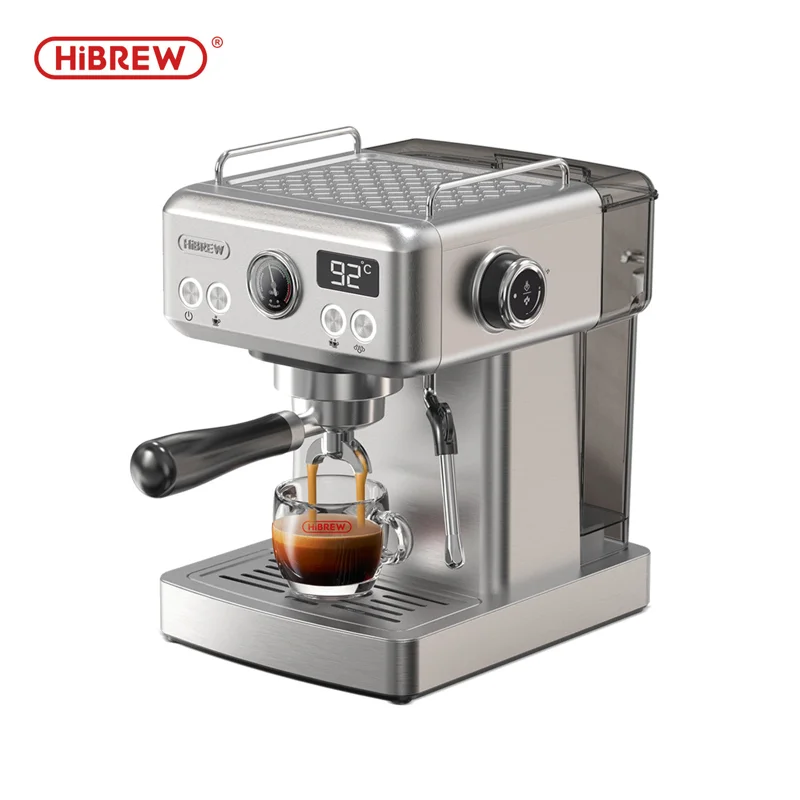
HiBREW H10A (US, silver) HiBREW H10A (US, silver)
Our verdict:
For adjustable brew settings
Choose the US H10A for adjustable brewing controls and a manual steam wand. Its non-pressurized baskets need a suitable espresso grind.
Keep in mind: A separate espresso grinder and hands-on milk work remain necessary; select the US 120V version.
New US offer below $500 before tax and shipping; checked 31 October 2026.
Check price at HiBREWChoose the H10A when you want adjustable brewing temperature, pre-infusion and shot volume rather than automatic milk settings. Its steam wand keeps jug work with you. This is an option for learning brewing adjustments, not for handing over the whole drink.
The stock non-pressurized basket route needs a suitable espresso grinder. Select the US 120V silver version and include that grinder in the complete setup budget.
Factors to consider when choosing a semi automatic espresso machine
Start with a short list of jobs. Someone has to prepare the coffee and load the handle. Someone also has to decide which basket to use. A machine can help with coffee delivery. Those earlier tasks stay with the user.
The milk stage is another choice. A manual wand asks you to work with a jug. Automatic milk settings take on part of that stage, while still needing preparation and care. Read that control separately from the coffee buttons.
The label alone cannot answer those questions. Use the exact model's controls and book. Our manual versus automatic guide explains the wider choice. Compare the actions you repeat for each drink before choosing a model.
A semi automatic espresso machine can use different coffee controls
The Bambino BES450 has coffee buttons and its own programmed-delivery process. You still prepare the basket. Choose that process if you want the coffee buttons to end delivery. Use the steps for that model.
The Stilosa EC260BK uses a manual coffee dial. The user turns it back to stop delivery. Choose that route if you want to manage the start and stop as part of each coffee. Do not choose it expecting the same coffee-button process as the Bambino.
The Maestro Plus EC950M has a different set of coffee and milk controls. Its automatic milk settings do not mean that beans become a finished drink without preparation. It still uses a handle and filters, and a whole-bean route still needs a separate grinder.
Compare what the controls ask you to do. Do not rank the machines by a broad feature label. A button can simplify a step without measuring the coffee recipe for you. A manual dial can give the user an action to control without proving a better drink.
Milk settings address a different part of the routine
The Bambino and Stilosa processes require the user to steam milk by hand. You hold the jug and work with the wand as the exact manual describes. That may be a task you want to learn. It may also be the task you most want help with.
The Maestro Plus has automatic milk settings and a manual option. Read the steps for the mode you want. The automatic settings do not give manual mode the same heat and texture controls.
Preparation and cleaning remain part of the milk drink. Check the jug position and follow the wand care steps. A rinse or purge action does not remove the need to wipe milk residue from the parts that require it.
Use the milk-frother guide to compare the work involved in other supported milk routes. Compare the required mode, milk vessel and care steps alongside the controls.
Resolve the basket before choosing the grinder
A whole-bean setup needs a suitable espresso grinder when the machine has none built in. That applies to all three models here. The machine's coffee button or dial cannot grind the beans or choose the dry dose.
Check the supplied filters and their intended coffee routes. The Bambino US instructions separate single-wall use with freshly ground coffee from dual-wall use with pre-ground coffee. Other kits need their own checks; do not transfer a basket description because the handles look similar in a photograph.
Starting with pre-ground coffee can change the equipment you need, where the machine's instructions support that route. It does not prove that every grind works with every filter. Use the exact basket directions rather than treating pre-ground as one uniform product.
If you expect to change the basket later, check the coffee preparation as well as the fit. A deeper filter can also need more clearance inside the handle. Separate required equipment from optional part changes when planning the full setup.
Plan the space around the working movements
Measure the intended position with the tank and jug in mind. You need access to refill water and remove the tray. A machine that sits under a shelf may still need room above or behind it for those tasks.
Add the separate grinder to a whole-bean plan. Give the handle a place to move between grinding, tamping and the group. Check where used grounds and wet parts will go at the end of the session too.
The cup matters when placed under the spouts. If you want to use a scale, measure the cup and scale as a stack. Check that you can remove both without tilting a full drink. A photo of a small espresso cup does not establish room for a tall travel mug.
The small-machine guide focuses on that working-space question. Choose the workflow before using a single body dimension to settle the whole counter plan.
More than one drink changes the order of jobs
Think through all the drinks you make in one session. A coffee followed by manual milk work can have a different sequence from a second coffee made after steaming. The exact instructions matter at the switch between those jobs.
The Stilosa's US book describes cooling after steam before returning to coffee work. Follow that sequence. Do not borrow a ready-state instruction from a machine with different controls or assume that every flashing light means the same thing.
A heater name also does not time the complete session. You still grind if needed and prepare each basket. Milk work and cleanup add tasks that are not captured by a stated heater-ready condition. Include each stage when deciding which routine fits the time you have in the morning.
The beginners' guide helps assess the work you want to learn. Choose the stock process you can use, rather than counting on a future part change to supply a missing control.
Separate machine eligibility from setup completeness
Check the exact model's current offer against the budget. The machine price does not account for an extra grinder or every tool missing from a particular retail kit. A whole-bean setup and a supported pre-ground route can therefore have different required equipment lists.
Write down what you already own and what the current kit includes. Then add only what the chosen coffee and milk routes require. Keep optional replacements on another list. A second tamper or a different basket should not automatically displace a needed grinder.
If the cost of a needed part is unknown, the full setup is not yet confirmed. Do not count that part as free. Compare the contents of an integrated machine with the separate machine and grinder you would otherwise need.
For mainly black drinks, see the Americano setup guide. For cold milk drinks, plan the coffee, cold milk and serving stages separately. Choose the equipment for the routine you will use.
Match the instructions to the controls you choose
The BES450 US book, Stilosa US EC235/260 book and EC950 US book describe different control sequences. Read the version for your exact machine before preparing the first basket. A coffee dial and a saved-volume button do different jobs. The milk mode has its own setup and care steps.
Keep the kit contents beside your intended coffee route when comparing offers. A whole-bean route needs a grinder even when the coffee stop is automatic. A milk drink needs the appropriate vessel and access to the wand. Add those required parts before treating any machine-only offer as a complete setup.
Frequently asked questions
What is a semi-auto coffee machine?
It leaves coffee preparation with the user while a pump supplies the brewing pressure. Shot stopping can be manual or use saved volumes, depending on the exact model and shop label. Milk needs a separate check. The Bambino and Stilosa have manual milk routines, while the Maestro Plus adds automatic milk settings. Read the actual controls rather than treating the category name as a complete feature list.
Do all these machines need a separate grinder?
For whole beans, yes. None of these three machines has a built-in grinder. Check the supplied basket and the model's own steps if you plan to use pre-ground coffee. That choice changes the parts you need. It does not prove that an unpriced extra fits the full setup.
Should I get an automatic or semi-automatic espresso machine?
Choose a semi-automatic workflow if you want to prepare the basket and adjust the recipe yourself. A saved coffee stop can help with shot ending while leaving grinding and cleanup with you. If you want internal coffee preparation, compare a documented bean-to-cup system separately. Check milk automation on its own, since it is a different part of the drink.
Can an automatic milk wand be left to clean itself?
No. The milk settings help with part of the steam work. They do not prepare the jug or clean the wand for you. Follow the exact book's care steps. Include that work when you choose the machine.
How should I compare a small machine with a larger one?
Measure the space you need to use the machine as well as store it. Leave room to fill the tank and move the jug. Add the grinder for a whole-bean route. Check the cup and scale as a stack under the spouts. Include the room needed to lift that stack out with the drink ready to serve.
Verdict
Choose a semi automatic espresso machine by the coffee and milk work you want. The Bambino has shot buttons and manual milk. The Maestro Plus adds milk settings and a manual option. The Stilosa has a manual coffee dial and manual milk. List the parts for your basket route before calling the setup complete.