



The Breville Bambino Plus vs Gaggia Classic Pro choice starts with the work you want to do. The Plus has automatic milk settings. The exact Classic E24 candidate has a manual steam and boiler routine. Account for a suitable separate grinder if you plan to use whole beans.
The Breville Bambino Plus vs Gaggia Classic Pro choice rests on milk controls. Choose the Plus for help with milk settings. Choose the exact E24 for its manual brew and steam routine. Both need a separate grinder for a whole-bean setup. Resolve the offered Classic version before comparing its parts.
Breville Bambino Plus BES500
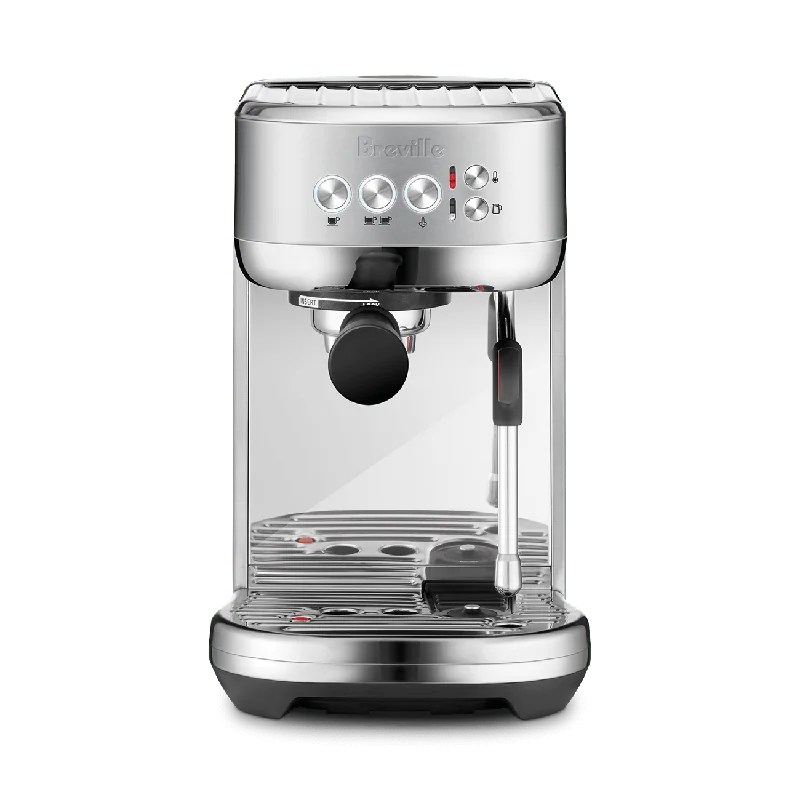
Breville Bambino Plus BES500 Breville Bambino Plus BES500
Our verdict:
For automatic milk settings
Choose the BES500 when its milk heat and texture settings address the work you want help with. Coffee preparation and cleaning remain part of the routine.
Keep in mind: It does not grind or prepare the coffee. Automatic milk settings still need a prepared jug and wand cleanup.
New US offer below $500 before tax and shipping; checked 31 October 2026.
View at BrevilleGaggia Classic E24 RI9380/46
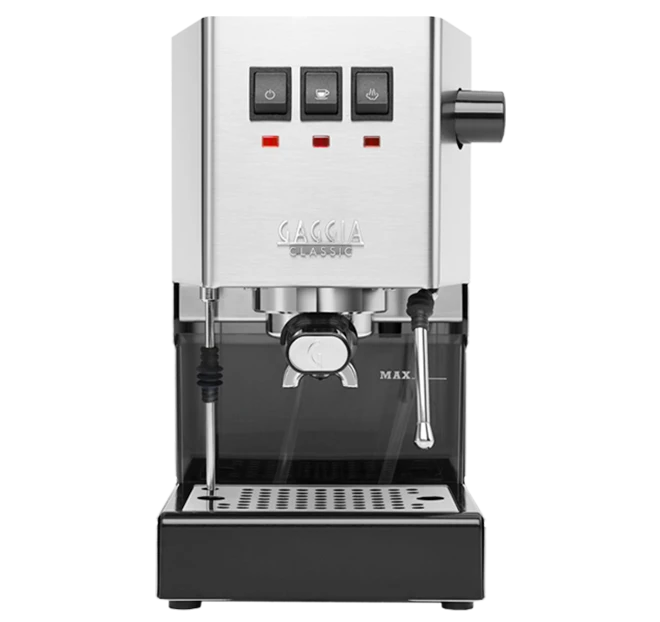
Gaggia Classic E24 RI9380/46 Gaggia Classic E24 RI9380/46
Our verdict:
Model reference: outside budget
Outside this budget: the US maker lists the E24 from $549. It is not an under-$500 recommendation.
Keep in mind: Steam-to-coffee work includes a cooling sequence. It has no automatic milk settings or integrated grinder.
Outside this budget: the US maker lists the E24 from $549. It is not an under-$500 recommendation.
View at GaggiaBreville Bambino Plus vs Gaggia Classic Pro: resolve the model first
Compare the US Bambino Plus BES500 with the current brushed-steel Classic E24 using the exact model codes. Gaggia's Classic Pro name spans versions. A feature tied to the E24 does not become a feature of every Classic Pro or Evo Pro on sale. Read the model code in the exact offer before comparing its features.
Heater design and handle size describe the machines. They do not show the heat of the drink or the time needed to make it. A nominal size also does not prove that every same-size accessory fits the relevant machine.
Make the milk decision before the accessory decision
If you want the machine to help choose and hold milk settings, begin with the Plus. Its manual describes automatic milk heat and texture controls. You set up the jug and start the process. This is a specific task that the stock E24 does not take over.
The E24 asks you to prepare for steam and work with the jug yourself. That can suit a person who wants to learn the manual sequence. It can also be the wrong choice for someone who finds that work a barrier to using the machine.
The difference matters more than a long list of possible aftermarket parts. An accessory cannot give the stock Classic the BES500's documented automatic milk cycle. Choose the operating process you want before choosing upgrades around it.
For a household that drinks only black coffee, the Plus's milk controls may have little use. For a household with several milk-drink users, they may be central to the choice. Choose the feature around the drinks people actually make. A milk-setting control does not settle the separate coffee preparation or grinder requirement.
Some buyers want both help now and a manual route later. The Plus has a supported manual steaming option. Read its manual for that mode instead of assuming that every action is the same as on a Classic. The controls and care steps belong to their own models.
What happens between a shot and a milk drink?
The Classic's manual operating process includes changing from brewing to steam work. The E24 US book also gives steps to lower the boiler temperature after steaming. That return is part of making another coffee, not an optional detail to discover after purchase.
Picture an order for one latte and one espresso. The person using the Classic needs to plan the sequence around its instructions. The choice of order affects when the milk and coffee are ready. Include the cooling steps and user preparation when deciding how that order fits into your routine.
The Plus has its own brew and milk sequence. Its automatic wand does not take over coffee preparation. The user still fills the basket and moves equipment. Read its steps in full rather than treating the word automatic as a whole-drink promise.
For repeated drinks, plan when you will refill the tank and empty the tray. Include cleanup after each milk session. A brewing specification does not include all those actions. A short heater claim also does not measure the time from an empty counter to several finished cups.
The practical question is which sequence you will follow every day. A manual boiler process can fit a deliberate drink routine. Automatic milk can fit a routine where jug work is the part you want help with. Decide from those jobs before assigning either machine a speed advantage.
The E24 boiler is an exact-version fact
Gaggia's E24 page identifies a brass boiler for that version. Check the full offered model before relying on that detail. The specification does not resolve the internal parts of a listing named simply Classic Pro. An older review of another generation does not establish which version a present offer contains.
Boiler material is useful when comparing the design. Read it alongside the controls and the documented sequence between coffee and steam. That combination helps you plan the user work. A material specification alone does not establish the taste of a drink or the condition of the unit offered for sale.
The Plus's ThermoJet description needs the same restraint. The maker's heating claim describes that system. It does not establish the heat of each separate serving and coffee part in your kitchen. Nor does it include the time spent preparing the coffee.
If temperature experiments or modifications are your main interest, keep them apart from the stock purchase. A machine altered by an owner has a different control set from the product described here. Do not give the Classic credit for an imagined future change while comparing the Plus only as supplied.
Use the exact manuals and manufacturer specifications for the decision. If the seller cannot confirm the Classic version, the version-dependent features remain unresolved. A colour, case shape or family name cannot fill that gap.
Basket choice is a separate decision on both machines
The BES500 book distinguishes single-wall and dual-wall baskets. It relates them to fresh-ground and pre-ground coffee. That choice changes what you need at the start. It does not change the fact that the Plus has no built-in grinder.
The E24 manual describes Crema Perfetta with its frothing jet device, plus a different arrangement for traditional baskets. Keep those parts paired as the manual shows. Do not leave an insert in the handle merely because it was there in the box.
For whole beans through a traditional or single-wall route, plan a suitable espresso grinder. A blade grinder or a vague fine setting does not settle the need. Useful adjustment steps matter when the coffee bed controls the resistance to water flow.
A supported pre-ground route can let you begin with another equipment list. Check that the exact offered kit contains the parts for it. The existence of a basket option in a manual does not prove every retailer's bundle includes it.
Write down the intended coffee route before ordering. That list should identify the basket and its related parts, the coffee source and the grinder if needed. Milk automation does not answer any of those coffee questions on your behalf.
What you can carry over from an existing setup
An existing suitable grinder may serve either machine, subject to the grind and recipe needed. A handle or basket is a different matter. The Plus uses Breville's nominal 54 mm system; Gaggia lists a nominal 58 mm system for the Classic. Do not expect their handles to swap.
Even within one nominal size, fit depends on more than diameter. Check locking tabs, rim, depth and the machine's compatibility listing. The correct basket can still sit inside a handle that does not lock into the group correctly.
A scale may be useful with either, but check the working fit. The cup and scale together need room under the spouts. A tray supporting a small cup does not prove space for a tall glass on a thick scale. Measure that whole stack.
A milk jug also needs room to work. The Plus's automatic cycle depends on the jug position described in its book. The Classic's manual routine needs space for the user's movements. A jug that suits one setup is not verified for the other by its capacity alone.
Keep optional tools off the required list until you have a reason to add them. A new tamper, distribution tool or handle can serve a preference. It does not become essential because it appears in a popular setup photograph.
Judge the required setup, not just the machine
The offer check applies to an exact machine offer. It does not settle the total for every drink route. A buyer starting with whole beans may still need a grinder. A buyer making milk drinks needs the relevant jug and safe working space.
Read the included kit for each offer and compare it with those needs. Count a required item once. Do not buy a spare tool merely because the same type appears in a guide. Do not omit a missing required item to make a setup look complete.
If a required item has no current eligibility evidence, the complete setup remains unconfirmed. That is a useful limit to know before ordering. The machine can qualify while the full equipment choice remains open.
Consumables and optional upgrades also have different roles. Approved cleaning supplies are part of ongoing care. An aftermarket control change is a separate choice. Neither should hide inside a vague promise that everything is included.
Use the shopping destination to check the exact configuration and checkout terms. Match its model code and contents list to the equipment you need. A familiar family name in an old search result does not establish the version or kit included in the offer you can buy today.
Cleaning tasks that deserve a place in the decision
Both machines need care after coffee and milk work. Automatic milk settings do not remove the need to wipe the Plus's wand. Manual steam on the Classic does not permit skipping its purge or cooling instructions. Use the steps for the exact model.
Breville describes the Plus's automatic wand purge as part of its sequence. Keep the tray in place and leave a clear path for the discharge. Dried milk on the outside is a separate cleaning task. A purge is not proof that every surface is clean.
The E24 US manual sets out its cleaning and descaling procedures. It also identifies supplies for some tasks that may be separate from the machine kit. Read the procedure before assuming a cleaner or blind filter comes in the offer.
Coffee-residue cleaning and scale removal serve different purposes. A generic household cleaner is not approved simply because another espresso owner uses it. Check the maker's permitted products and steps, including which parts may be washed in which way.
If daily care is likely to decide whether you keep using the machine, read those pages now. A useful buying comparison includes the jobs after the drink. It should not end its account of ownership at the first cup.
Choose the Plus for help with milk
The case for the Plus is clearest when the automatic milk settings solve a frequent task. You want milk drinks, you can prepare the jug as directed, and you would rather select settings than control the entire steam routine by hand.
That choice still leaves coffee preparation in your hands. It is not a bean-to-cup purchase. You should be comfortable with filling a basket, tamping, fitting the handle and cleaning the coffee parts. The machine does not inspect your grind or weigh the drink output.
The Plus may also suit a shared household that wants a documented automatic milk route and a manual option. Agree on the cleanup steps and the kit everyone will use. The benefit is a common set of controls, not a promise that every user will produce the same result.
Choose another category if you need a built-in grinder or a one-button milk drink. Those are different requests from automatic wand settings. The Plus's specific automation should remain clear in the purchase decision.
Choose the E24 for its stock manual process
The Classic E24 case is strongest when you want to run the brew and steam sequence yourself. You understand the return from steaming to brewing and want to work with its documented controls. You have resolved the exact version and the coffee route.
Its accessory system can be relevant if you already have verified compatible parts. That is a fit advantage for your particular setup, not a universal claim that a larger handle makes better espresso. Check each part rather than assuming the nominal size settles everything.
Skip the Classic if you expect the stock machine to select milk temperature and texture for you. It does not offer the Plus's automatic wand routine. A possible future modification is not a substitute for a required feature at purchase.
If you are undecided, describe the daily task you most want to avoid. If it is manual milk work, the Plus addresses that task. If you want to take charge of the boiler and manual brew routine, the E24 offers that path. A preference for either process needs no invented taste score.
Decide which manual task you want to learn first
A new owner may want to work on coffee preparation before taking on manual milk. The Plus can suit that order because it offers automatic milk settings. The owner still prepares the basket and starts the coffee delivery. The milk feature does not choose the grind or correct a coffee-preparation mistake.
The E24 presents a different stock routine. The user controls coffee delivery with the brew switch and works with milk by hand. Choose it because you want those actions. Decide whether you want that involvement for the drinks you make often. More manual tasks do not, on their own, establish an easier learning path or a better drink.
The distinction can also matter later. The BES500 retains a manual milk option. Someone choosing automatic milk today need not treat that choice as a commitment never to hold the jug and work with the wand. Read its manual-mode instructions when that task becomes relevant.
Keep the basket route separate from this learning decision. A person who chooses a traditional single-wall route needs the coffee preparation that route requires. A milk setting cannot supply a missing grinder. A different boiler design does not supply one either.
You can use that order to reject an unsuitable machine. If automatic milk help is essential, the stock E24 does not meet the requirement. If the reason for choosing the Classic is its manual brew and steam process, assess that process directly. Do not buy on the hope that an internal modification will later add the feature you wanted at the start.
Leave a clear handover for the next user
In a shared kitchen, the last drink sets up the next one. Leave a note if the machine is still in a steam or cooling step. Put the clean milk jug where the next person can find it. The Plus's milk settings and the E24's switches do not tell that person which tasks you have already finished.
Agree on the coffee basket too. A change of basket can change the required coffee route. Keep the matching parts together so the next user does not have to guess from a loose filter.
Breville Bambino Plus vs Gaggia Classic Pro: choose the milk routine
Read the milk-mode instructions in the BES500 US instruction book before choosing automatic milk work. Compare them with the brew steps and the return from steam to coffee in the E24 US RI9380 manual. The important difference is who controls each step, not which machine has the longer list of features. Include the cleanup after your usual drinks when making that choice.
Keep the control and basket choices together when planning either setup. Whole beans need a suitable grinder, while the chosen milk routine needs its own jug arrangement and care steps. Confirm every missing item beside the exact kit. A machine that meets the machine-only ceiling does not establish a complete setup total when one of those required costs is still unknown.
The Plus guide and Classic guide give each model more context. For manual milk in a compact Breville, read the standard Bambino comparison.
Frequently asked questions
Does the Classic E24 have automatic milk settings like the Plus?
No. The stock E24 uses a manual steam and jug process. The BES500 has settings for automatic milk heat and texture, plus a manual option. Both still require the user to prepare the milk area and clean it afterward.
Does E24 mean every Classic Pro has a brass boiler?
No. Gaggia ties that specification to the E24. A listing named only Classic Pro or Classic Evo Pro does not resolve the same internal parts. Check the full model and offered version before making that comparison.
Which one includes a grinder?
Neither machine has a built-in grinder. A whole-bean route needs a suitable separate espresso grinder. Check the exact kit and intended basket before treating either machine as a complete setup.
Will the same portafilter fit both machines?
Do not expect it to. Breville identifies a nominal 54 mm system for the Plus; Gaggia identifies a nominal 58 mm Classic system. Check the locking tabs and rim. Then check basket depth and the handle's locking fit.
Do automatic milk settings decide which espresso is better?
No. Milk settings address the steaming stage, while the coffee still needs its own preparation. Use that feature to decide which milk task you want help with. Compare the basket route and required grinder separately. A control that helps with one stage does not prepare every other part of the drink.
Verdict
The Breville Bambino Plus vs Gaggia Classic Pro choice rests on milk controls. Choose the Plus for help with milk settings. Choose the exact E24 for its manual brew and steam routine. Both need a separate grinder for a whole-bean setup. Resolve the offered Classic version before comparing its parts.