
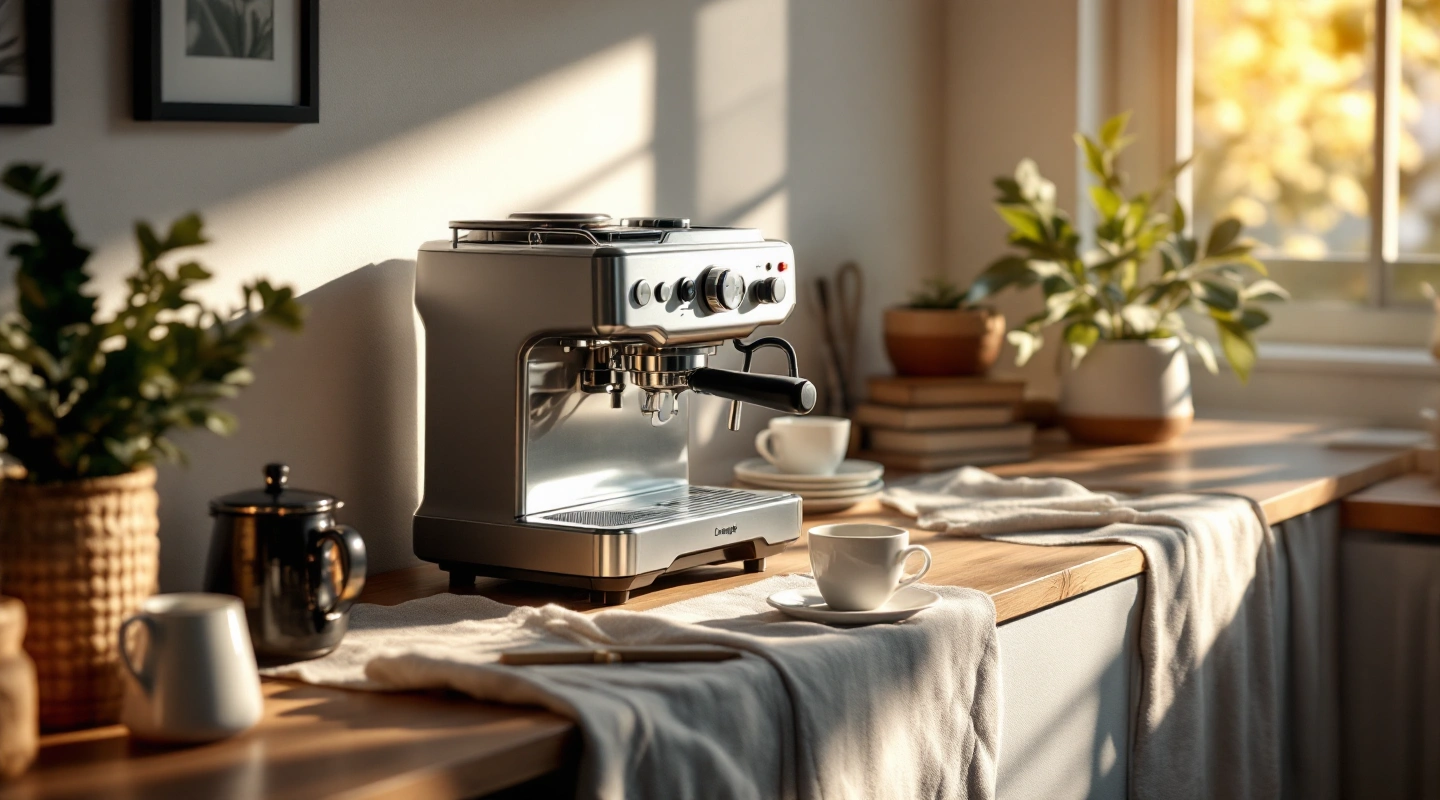
The DeLonghi Stilosa espresso machine EC260BK uses a coffee dial and manual milk work. Choose it if you want to start and stop coffee by hand. Check the supplied filters and the grinder for your coffee route. Allow for the jug work and the return from steam to coffee when planning your drinks.
The DeLonghi Stilosa espresso machine suits a buyer who wants a manual coffee and milk routine. Check the exact EC260BK kit and all needed extras. Choose another route if you need a programmed shot stop or automatic milk settings. Use the model's own cooling steps after steaming.
DeLonghi Stilosa espresso machine: start with the dial
The Stilosa EC260BK is for a person willing to run the coffee and milk steps. The user prepares the basket, fits the handle and chooses the dial position. The ready light is a cue in that process. It does not prepare a dose or stop a drink at a chosen weight.
DeLonghi's US instructions tell the user to return the selector to ON when the desired coffee has been delivered. That is a buying distinction. If you want a programmed shot to finish without that action, do not assume the Stilosa provides it because another compact machine does.
For a first setup, make the controls easy to see and reach. You need to watch the cup and act on the dial. Keep the brewing area clear. A low purchase barrier does not turn a manual coffee routine into a one-button drink.
This process can suit someone who wants to learn the stages. It can be a poor fit for a person who mainly wants to press a drink name and walk away. Choose the Stilosa for the work it supports, not a promise that it removes that work.
What the supplied filters mean for your starting kit
The current EC260BK US support page supplies DeLonghi's EC235/260 book. Its accessory section lists the portafilter, measuring spoon/tamper and coffee filters. It identifies an ESE-pod route using the relevant filter. Follow the exact diagrams for the kit you receive.
A pod route is not a route for any capsule that fits loosely in the handle. ESE espresso pods and hard coffee capsules are different formats. Buy coffee for the supported system. Do not force a capsule into a filter designed for another type of coffee.
For ground coffee, start with the manual's filter and preparation steps. The combined spoon and tamper is working equipment. A separate metal tamper is an optional purchase until you have a clear reason to replace the supplied tool.
For whole beans, add a grinder suitable for the chosen espresso route. There is no grinder built into the Stilosa. The fact that the machine can accept ground coffee does not mean the complete whole-bean setup is already in the box.
Keep the initial list tied to your drink. Start with the machine kit and coffee. Add a milk jug if the offered kit does not include the one you need. Keep replacement handles and other upgrades apart from the required starting parts.
A ready light is one step in the preparation
The manual gives a preheating routine for the machine and the parts used to serve coffee. Read that routine alongside the brewing instructions. The light and the preparation steps work together. A light coming on does not mean the user has already warmed every separate item.
Someone starting from an empty tank and an unprepared basket has more work to do than someone returning to a ready machine. Those are different situations. Include filling the tank and preparing both cup and coffee in your morning plan rather than treating the light as a finished-drink signal.
You can plan the actions before you buy. Decide where you will fill the tank, prepare the basket and place the cup. Check that you can return to the dial without reaching over a hot drink. The routine should suit the counter as well as the person.
The initial rinse is another separate task. Follow the first-use section before making coffee. The daily brewing sequence assumes that you have already completed the maker's setup steps.
Milk drinks use a second manual sequence
The Stilosa book describes making coffee, selecting steam and preparing milk in a jug. The user handles the jug and steam dial. There are no automatic milk heat and texture settings in this documented routine.
The milk device is a cappuccino maker with parts to clean after use. It should not be confused with a fully automatic milk carafe. The machine does not fill the jug, place it or pour the milk into the cup.
Allow room for the jug you will actually use. It needs to sit under the milk device and then move to a safe resting place. A jug chosen only because it looks good beside the machine may be awkward in the available space.
Steam and hot surfaces need the care in the instructions. Keep clear of the discharge and follow the cooling steps before removing parts. Buying a compact machine does not reduce the need for a safe working area.
Choose the milk device for the work you want to do with the jug. Read its steam directions before planning a free-pour routine. The presence of a frother alone does not establish a particular foam texture or a finished pattern in the cup.
DeLonghi Stilosa espresso machine: plan the return to coffee
The US manual tells users to cool the boiler after milk frothing before making coffee again. This is a useful point to read before the purchase. A person alternating between milk drinks and espresso needs to include that return in the routine.
Think through a shared order. If one person wants a cappuccino and another wants straight espresso, decide when each coffee and milk stage will happen. Follow the maker's order and cooling procedure. Do not guess that the next shot can begin at once because the previous milk task has ended.
DeLonghi also gives advice for making several cappuccinos. Read that order before planning a shared round of drinks. Keep the cups and milk vessel ready in the places you will use them. A manual sequence still needs attention between the coffee, milk and cleaning stages.
If this sequence sounds like more work than you want, use that as a reason to compare another control style. A thermoblock machine or an automatic milk system has its own procedure to check. The category label alone is not a timing result for either option.
Hot water can serve a different drink route
The manual has a hot-water procedure through the cappuccino maker. That gives an Americano buyer a route to investigate. It does not mean the machine has a dedicated Americano drink button or automatically chooses a water-to-coffee ratio.
Check the cup position for that water step. It differs from the position under the coffee spouts. You need a safe way to handle the cup without crowding the steam area. Follow the manual's delivery limits and stop controls.
If you mostly make iced drinks with cold milk, the steam routine may be less central. Plan the espresso and serving vessel first. A large iced-drink glass need not sit under the spouts if your safe serving method uses a separate espresso cup.
Decide which drink path you will use most often. That makes the equipment list more useful than buying every accessory for every possible beverage on the first day.
The counter needs access as well as a footprint
The tank lifts out from the machine. Check that you have room to access it under the intended cupboard. A case fitting on a shelf does not prove that it has the access and clearance its use requires.
The tray also needs to come out. Leave a clear route to the sink. A crowded counter can make a small tray awkward to empty when other equipment blocks the path. Keep hot cups away from that route.
Cup clearance should match your actual equipment. If you plan to use a scale, check the scale and cup together. The manual's tray options for taller cups do not prove that every glass and scale combination will fit.
The preparation area can be as important as the machine width. Give the handle a stable place for filling and tamping. Do not use a narrow case as a reason to balance the rest of the equipment at the edge of the counter.
Care involves more than an occasional descale
The milk device needs attention after use. The manual describes removing and cleaning the cappuccino maker and nozzle after the relevant cooling steps. It is a set of parts to maintain, not a sealed milk system that cleans itself.
Coffee filters also have their own cleaning instructions. Keep the pieces in the right order when taking them apart as directed. A filter looking clear from above does not settle whether the lower parts are clean.
Descaling serves a different purpose from removing coffee or milk residue. Use the approved product and sequence for this exact model. A cleaning habit from another brand is not proof that a product or process is suitable here.
If you share the machine, agree on the condition in which it should be left. A clean handle, emptied tray and cared-for milk device make the next session easier to begin. The manual controls do not remove those household tasks.
Judge the stock machine before planning upgrades
The supplied process should meet your needs before you consider replacement parts. If you need a programmed shot stop or automatic milk settings, an imagined future change is not a feature of the retail offer.
A new basket or handle can also change the coffee requirements. Verify exact fit and the intended recipe. Do not assume that a nominal diameter proves the locking interface or that a different basket can use all the old settings unchanged.
Internal modifications are outside this buying guide. They involve a different machine state and can introduce electrical, heat and pressure hazards. Choose the stock controls using the maker's instructions. Do not compare a modified owner's machine with an unmodified alternative as though both offers contain the same equipment.
Compare the coffee controls before choosing
If you want preset shot buttons, compare the Bambino's documented process. It still leaves coffee preparation and manual milk work to you. Decide whether the shot control changes a task that matters in your kitchen.
Keep the EC260BK instructions beside the kit
The US EC260BK support page provides the EC235/260 instruction book, revision 57132C9964_00_0426. Its accessory, coffee, cappuccino, hot-water and care sections describe different parts of the routine. Find the relevant section before changing from one task to another. A shared book still needs to be read for the exact model on the counter.
Check the model code when the box arrives, then identify the supplied filters and preparation tool. Keep the loose pieces with the packing list until you have checked the complete kit. Account for the grinder and milk vessel you still need. A machine-only offer does not settle the cost or contents of that complete setup.
Frequently asked questions
Does the Stilosa stop a coffee shot automatically?
The US instructions describe a manual dial process. The user turns the dial back to stop coffee delivery. Do not choose the EC260BK expecting a programmed single- or double-shot stop. Decide how you will follow the intended recipe before starting. A familiar control does not weigh the coffee or decide the correct drink volume for you.
Is the Stilosa's milk frother an automatic milk system?
No. The documented process asks the user to prepare the jug and work with the milk device. It is not the automatic milk heat and texture routine found on a Maestro Plus or Bambino Plus. Read the Stilosa's exact steam and care steps. A frother attached to the wand does not remove the user's role.
Do whole beans need another piece of equipment?
Yes. The stock Stilosa does not have a built-in grinder. A whole-bean route needs a suitable separate one. Check the filter and its intended coffee preparation before deciding which grinder or pre-ground route to use. A qualifying machine offer does not account for a grinder you still need, and a missing required cost is not zero.
Can I brew coffee straight after steaming milk?
Follow the US manual's cooling process before returning to coffee after steam. That change is part of the drink routine. Read the required sequence before planning the next cup in a mixed order. The ready indicators and dial positions belong to this exact model; a general video for another DeLonghi is not the same instruction.
Should I buy replacement tools with the machine?
Check the supplied filters and scoop/tamper first. A separate tool should solve a clear fit or handling need. Confirm the jug and other parts in the exact offered kit before calling the milk setup complete. A replacement basket or handle also needs its own model and clearance checks. A shared nominal size does not prove the full fit.
Verdict
The DeLonghi Stilosa espresso machine suits a buyer who wants a manual coffee and milk routine. Check the exact EC260BK kit and all needed extras. Choose another route if you need a programmed shot stop or automatic milk settings. Use the model's own cooling steps after steaming.