
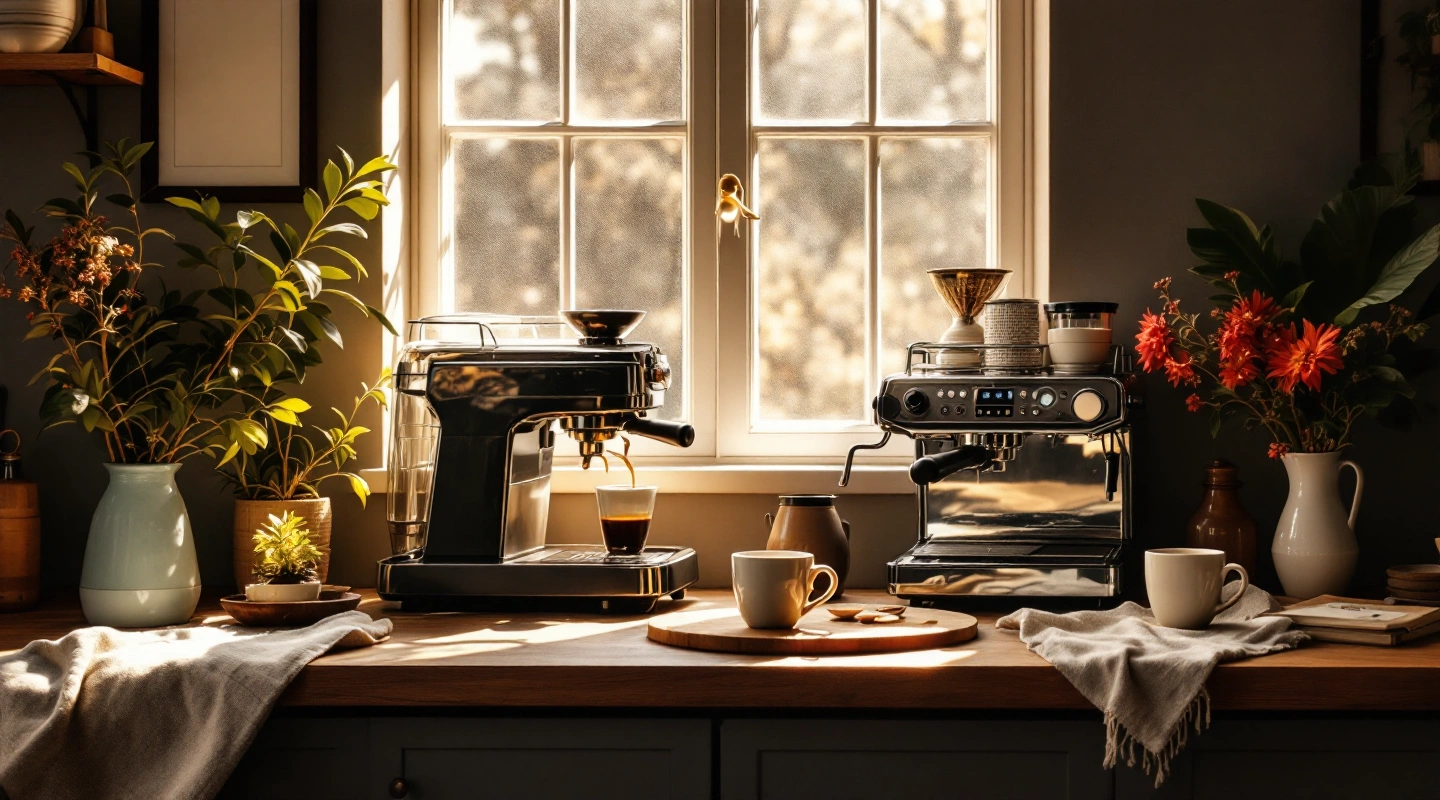
The manual vs automatic espresso machine choice is about control and effort. A true manual lever asks you to take part in the pressure process. An automatic machine takes over some or all of the shot cycle. Neither term alone tells you how the coffee is ground or how the milk is made.
Choose a manual lever if the pressure process is part of what you want to learn. Choose an automatic workflow if repeating a drink with fewer brew controls matters more. Check whether automatic means saved shot volume or full bean-to-cup preparation. Count the whole routine, from heating water to washing parts. A lever alone does not establish better taste.
Manual vs automatic espresso machine: start with the words
Manual can mean a true lever machine, or it can be loose shop language for a pump machine with a portafilter. These are different mechanisms. Ask how the machine creates pressure before you compare the work involved.
With a direct lever, the user applies force through the mechanism. Other lever designs use a spring. Some need a separate source of hot water. Those differences affect hand effort and the total kit on the counter.
Automatic also spans more than one workflow. A saved shot stop can sit beside a manual grinder and hand-filled basket. A bean-to-cup machine moves grinding and dosing inside. Do not treat those as the same purchase.
Separate the pressure system from the shot stop
The National Coffee Association's espresso reference distinguishes four machine categories by user involvement. It provides a category map rather than proof of a particular model's performance.
The Breville BES450 US manual documents a pump model with user basket preparation and saved shot volumes. That example shows why “automatic” can cover one control without covering all the preparation. Keep pressure generation separate from shot stopping when reading a model description. A pump and a saved volume can coexist with user preparation of the coffee basket.
Manual vs automatic espresso machine task comparison
| Decision | Manual lever | Automatic shot stop | Fully automatic bean-to-cup |
|---|---|---|---|
| Pressure | User or spring mechanism, depending on design | Pump system | Internal pump system |
| Coffee dose | User prepares basket in typical designs | User may still prepare basket | Internal dose process |
| Shot ending | User follows the lever process | Programmed amount | Programmed drink cycle |
| Heat source | Check exact model; may need separate water heating | Built-in system, model-specific | Built-in system, model-specific |
| Milk | Separate feature or tool | Separate feature check | Separate milk-system check |
| Main trade-off | More direct control and technique | Less work at the shot stop | Less loose-coffee handling within set limits |
Scroll for more →
Treat this as a set of questions for a manual, not a promise about every machine in the category. A model may combine controls from more than one column.
Direct control can add useful feedback
A lever makes the pressure step part of the user's action. That can appeal if you want to control that step for each shot. You may be able to vary the force during the pull, within the mechanism's limits.
The same involvement adds a variable. If you alter grind and hand action together, you may struggle to tell why the cup tastes different. Keep a recipe note and use a repeatable process before trying a different pressure pattern.
A lever gauge, if a model has one, is a specific instrument at a specific point. Its reading does not automatically equal every pressure inside the coffee bed. Do not infer a measured brewing profile from a product's maximum pressure label.
An automatic cycle can remove one decision
A saved shot volume can reduce the need to decide when to stop each brew. The user still needs to prepare the same dose and basket consistently. Coffee changes can still call for a grind or recipe adjustment.
Bean-to-cup takes on more of the task. Its internal system doses and brews within the options the maker provides. Check what the strength and volume settings mean. They may offer useful control without matching the choices available with loose coffee and a separate basket.
Convenience is strongest when the fixed options suit the drinks you want. A long feature list is less helpful if it hides the one setting you use each morning. Read the drink setup and reset instructions before judging the screen.
Count the whole heating routine
A compact manual brewer may need a kettle and a warm-up step. A model with its own heater has a different routine. Read the exact maker's process before assuming a lever has no waiting time or no electricity use.
For an automatic machine, separate heater readiness from full drink readiness. A ready light does not grind the beans or warm a cold cup. A stated warm-up claim should keep the maker's conditions attached to it.
After steaming, some machines need a different heating state before another coffee. That sequence can matter more than the first ready light when two people want drinks. Look for the actual steps rather than a guessed number of seconds.
Include the required grinder in the budget
A manual basket does not grind coffee for you. If it needs a fine adjustable grind, include a suitable grinder in the plan. Check the grinder's intended use and adjustment range, rather than assuming any device sold for coffee will work equally well.
An automatic shot stop does not imply an included grinder. A bean-to-cup design usually contains the grinder as part of its system. That can simplify the purchase list, but its capacity and adjustment limits still need a model check.
Keep machine-only and complete-setup totals separate. Do not compare one bare brewer with another system's full kit as though they included the same tasks. Our budget guide explains how required equipment enters that second total.
Hand effort and physical fit
Look at how the lever operates, where the force goes and how the base stays stable. A small photograph cannot tell you whether the motion suits your reach or grip. Read the maker's dimensions and instructions. Ask to see the exact mechanism in use.
Do not translate a pressure figure into a hand-force claim without the lever geometry. Two mechanisms can produce pressure in different ways. If the maker does not publish a required effort, leave the number unknown.
For an automatic system, check tank and tray access. A button may be easy to press while the water tank is awkward to lift under a cupboard. Include those routine tasks when deciding whether the system suits its user.
Milk drinks may require a second system
Some manual brewers focus only on coffee. If you want milk drinks, work out the heat and texture process before buying. A separate frother may make a different kind of foam from a steam wand. Match it to the drink and pour you want.
An automatic coffee cycle does not establish automatic milk. You may still move a jug by hand. A hose or carafe system can remove that task, but it adds milk-contact parts to clean.
If latte art is a goal, compare the milk workflow rather than the word automatic. The latte art guide explains the roles of texture, cup position and pouring. A machine cannot promise a pattern simply by having a milk button.
Cleaning and service questions
Manual systems still need clean coffee-contact parts and care for seals. Follow the maker's guidance on disassembly. A simple-looking device is not permission to use an abrasive cleaner or soak every part.
Automatic systems have their own care paths. Check whether the brew unit is removable, how rinses work and what cleaning supplies are required. More automation can move work into a scheduled cycle rather than remove it.
For either type, look for a reachable manual and a clear parts route in your market. Do not claim that a machine is easy to repair from the number of visible switches. Parts availability and service instructions need current evidence.
Choose with two written routines
Write the complete path to one drink for each type. Include filling, warming, grinding, brewing, milk and cleanup. Mark which steps you will do and which the machine performs. Keep unsupported time estimates out of the list.
Then repeat the exercise for your busiest normal session. A single espresso and several milk drinks are different jobs. You may prefer direct control for one and a repeatable automatic cycle for the other. The better fit follows your actual routine.
Before you choose, mark out the space for each task on the counter. Put an empty cup where the spouts would sit. Leave room to fill the tank and set down the wet handle.
Add the grinder or kettle you would need. Check that the person who will use the machine can reach each part. A short list of controls does not show how the whole station will fit.
Frequently asked questions
Is a pump machine with a handle a manual lever?
No. A portafilter describes the coffee holder. Check whether a pump or lever mechanism supplies the pressure.
Does manual always mean cheaper?
No. Category names do not prove current price. Count the required grinder, heat source and milk tools as well as the brewer.
Can an automatic machine use fresh beans?
Yes, depending on its coffee system. Bean-to-cup models grind internally. A portafilter model may use a separate grinder.
Is one type better for learning?
They teach different tasks. Choose based on whether you want pressure control, basket preparation or a repeatable drink cycle.
Verdict
The manual vs automatic espresso machine choice should follow the work you want to do. Check the actual pressure system and the meaning of automatic first. Compare drink preparation with the cleanup that follows it. Use the machine types reference to keep those separate decisions clear.