
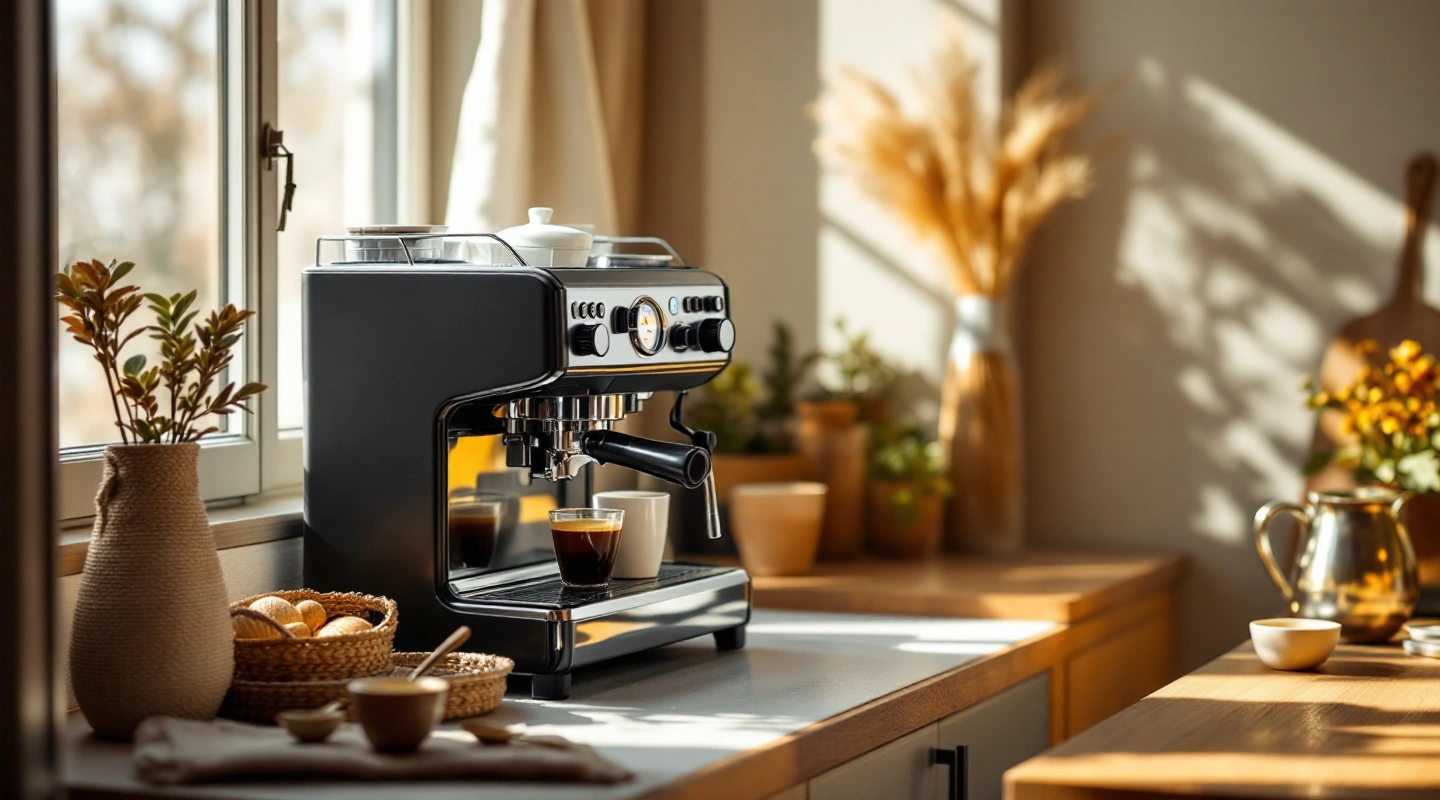
Choose a small espresso machine by its working space as well as its case. The Dedica Duo and Bambino offer coffee buttons with manual milk work. The Stilosa uses a manual coffee dial and manual frothing. Each needs a suitable separate grinder for whole beans. Check tank and tray access plus the jug path before choosing a tight gap.
#1. DeLonghi Dedica Duo EC890M
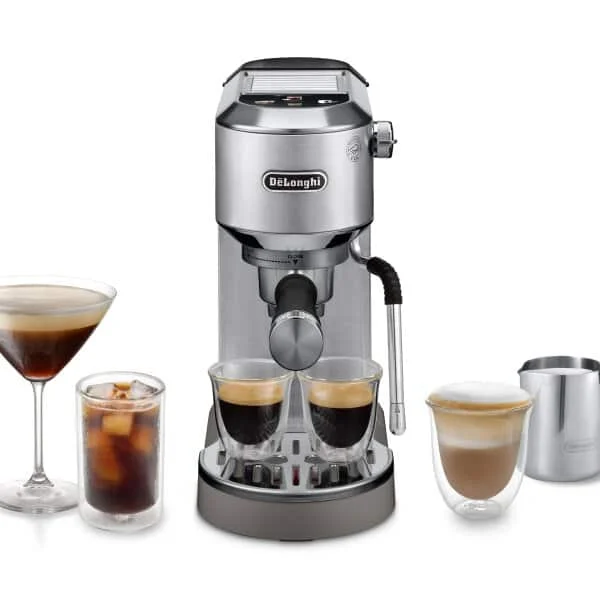
DeLonghi Dedica Duo EC890M DeLonghi Dedica Duo EC890M
Our verdict:
For a narrow counter
Choose the Dedica Duo for its slim case, preset coffee recipes and manual My LatteArt steam wand. Plan refill access and space for a grinder.
Keep in mind: Milk texture is manual and a grinder is not built in. A slim case does not account for the rest of the setup.
New US offer below $500 before tax and shipping; checked 31 October 2026.
View at DeLonghiThe Dedica Duo has preset coffee recipes and a manual My LatteArt steam wand. The maker describes a 15 cm slim case. This is the width of the machine, rather than a measurement of the complete working station.
Leave room to refill its tank, remove the tray and move the jug. Whole beans need a separate suitable grinder. The narrow case is useful only if these tasks also fit your counter.
#2. Breville Bambino BES450
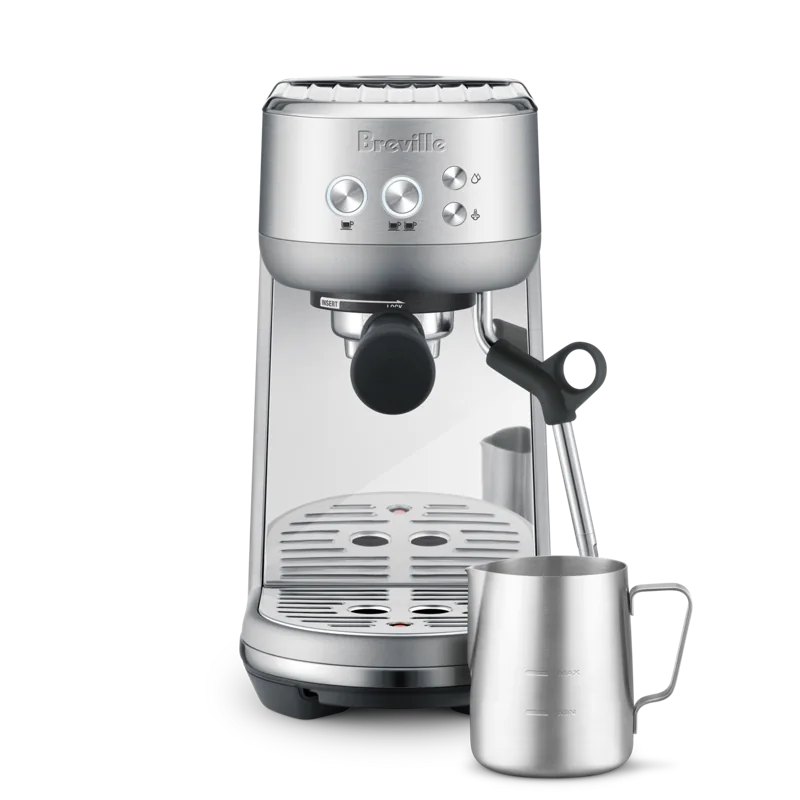
Breville Bambino BES450 Breville Bambino BES450
Our verdict:
For button controls
Choose the BES450 for its controls after confirming the exact unit's dimensions and working access.
Keep in mind: Confirm the exact unit's labelled size, tank access and wand movement before choosing a tight gap.
New US offer below $500 before tax and shipping; checked 31 October 2026.
View at BrevilleThe Bambino BES450 gives a buyer coffee and hot-water buttons with a manual steam wand. It has no built-in grinder and does not offer the Plus's automatic milk settings. Those differences affect the tools and work around it.
For a tight gap, get a current labelled size drawing for the exact offered unit. Include the room needed to use and clean the machine. Do not take a dimension string with uncertain axes and turn the smallest figure into an assumed width. Check the tank and wand access too.
#3. DeLonghi Stilosa EC260BK
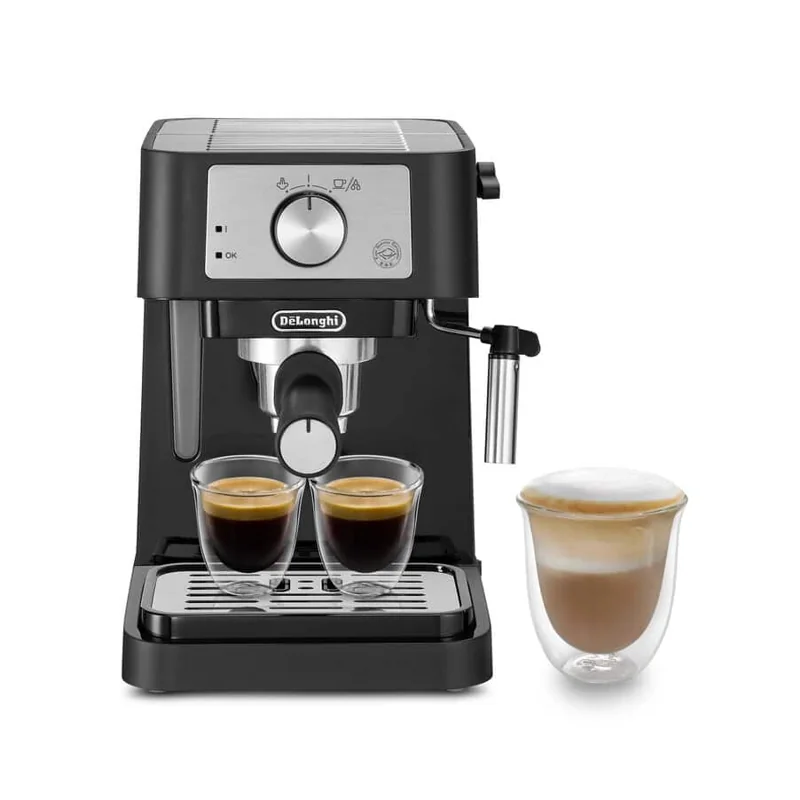
DeLonghi Stilosa EC260BK DeLonghi Stilosa EC260BK
Our verdict:
For manual dial work
Choose the EC260BK if its manual controls and documented case dimensions suit the intended layout.
Keep in mind: Its stated depth is 13.5 inches before extra working room. Whole beans need a separate grinder.
New US offer below $500 before tax and shipping; checked 31 October 2026.
View at De’LonghiThe EC260BK US manufacturer specification labels its case as 8.07 inches wide, 13.5 inches deep and 11.22 inches high. It is a different shape to assess, not a machine ranked as the narrowest choice. Check that depth against the usable counter, not just its front edge.
The coffee selector needs a manual stop and the milk stage remains manual too. Leave room to operate those controls. Check the cup-tray arrangement in the US book with your own vessel. Measure the space under a shelf with the tank's removal path in mind.
Factors to consider for a small espresso machine
Draw the usable counter area first. Keep space that is already needed for another appliance off the espresso plan. A cabinet overhang or plug can limit where the case sits. Measure the actual place rather than assume that the whole counter is free.
Next mark the machine's labelled width and depth. Check the exact model and market before using a size from another source. Keep the axes with the figures. If two sources disagree, resolve the exact unit before you place an order that depends on a tight fit.
Height matters under shelves. The case fitting below a cabinet does not prove that the tank can be removed there. Read how that tank is filled and handled. A machine that must move for each refill has a different working layout from one with clear access in place.
Small espresso machine: plan the space in use
Place the handle into the drawing as well as the body. It needs to enter and lock as directed. Leave a stable area for filling and tamping the filter. The front edge of a case is not the end of that coffee-preparation work.
For milk drinks, mark the jug's route at the wand or frother. A narrow space beside the case may not leave room to hold and tilt the vessel. Follow the exact milk device's instructions. An adjustable frother and a bare manual wand are different routines to assess.
The tray also needs a clear removal path. Think about where it goes when it contains water. A nearby grinder or cup rack should not block that job. The aim is a layout you can use and clean, rather than a row of cases packed with no spare movement.
Check the largest cup you use with any scale beneath it. Leave room to lift the filled cup away from the spouts without tilting it. A tall serving glass can use a separate espresso cup if that is the routine you intend.
Make that plan with the person who will use the machine most often. A cupboard height that suits one person may still leave the tank awkward to lift for another.
Choose what stays on the counter
These three stock machines need a separate grinder for whole beans. Decide where that grinder is filled and where its grounds go. A hand grinder may be stored after use, while an electric one may stay beside the machine. Neither route removes the need for a stable transfer spot.
Keep required items separate from optional tools. A supplied preparation tool may serve the starting routine. A large knock box or extra tamper stand need not join the layout before you know why you want it. Start with the job an item must do and the space needed to use it.
For a shared space, check who resets the station after a drink. Cups and a jug need a clean place to dry or be stored as directed. A machine-only photo does not include that working area. Mark out those places beside the machine before choosing a confined gap.
Confirm the case size with room to work
The Dedica Duo US manufacturer specification identifies the EC890M. Use the BES450 US book for the Bambino's control sequence. The EC260BK US manufacturer specification identifies the Stilosa. Match the exact unit and its kit to the relevant owner guide.
Use the case width to plan the first gap, then check the room for each task. A grinder may need its own filling and cleaning area. The tank and jug also need clear paths. Unknown required costs leave the whole setup unconfirmed, and a kitchen photograph cannot prove how a retail unit will fit your space.
Frequently asked questions
Is the narrowest machine the smallest complete setup?
Not necessarily. A whole-bean routine also needs a grinder, and milk work needs space for the jug. Tank and tray access can extend beyond the case while you work. Compare the complete layout for the intended drink. The width printed for one machine is not a measured footprint for every required item.
Can I use the smallest number in a size string as width?
No. Use a labelled drawing or a clear width, depth and height drawing for the exact unit. A shop and maker may present numbers in different orders. Do not guess the axes to make a tight gap work. Ask for a confirmed size and allow the operating room the exact instructions require.
Does a smaller case mean fewer manual steps?
No. The Duo and Bambino have coffee buttons but manual milk work. The Stilosa also requires a manual coffee stop. All three leave basket preparation and cleanup with the user. Compare the daily actions alongside the case width before choosing by size alone.
Can these machines use whole beans without a grinder?
The stock models here do not have built-in grinders. A whole-bean route needs a suitable separate one. Check the supported coffee and basket route in the exact book before buying it. Pre-ground use has its own directions and does not make every basket choice the same. Keep the required equipment on the space plan.
Can I place the machine directly below a cupboard?
Check the labelled height and the tank's removal route for the exact unit. A case can fit while its tank cannot be lifted out in place. Leave access to the controls, cup and milk device as the maker directs. If the machine must move for refilling, account for that movement and the safe handling steps too.
Verdict
A small espresso machine still needs room to work. Consider the Duo or Bambino for coffee buttons with manual milk, or the Stilosa if a manual coffee stop suits your routine. Confirm tank access and jug movement with the whole setup before treating any case dimension as proof of complete fit.