
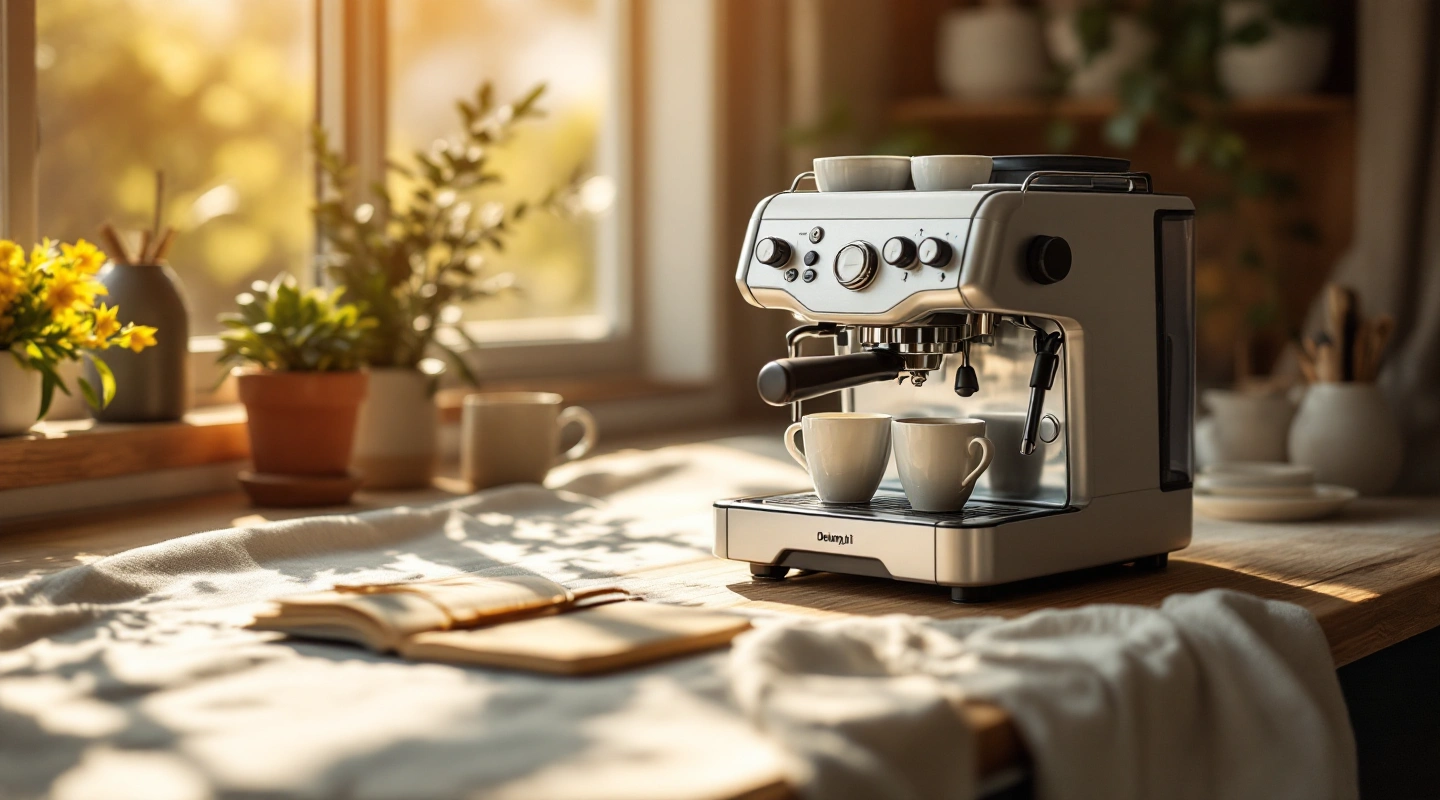
The DeLonghi ECP3420 espresso machine uses a manual coffee dial and cappuccino maker. It suits someone who wants to prepare the coffee and take charge of the milk stage. Read the shared US book by model, since the ECP3630 has a milk control that the ECP3420 does not. For whole beans, allow for a suitable separate grinder as well as space to prepare the basket.
Choose the DeLonghi ECP3420 espresso machine if its manual dial and milk process suit your drinks. Account for the exact filters and any missing grinder or jug. Choose the ECP3630 only if its milk ring addresses a need you have. Compare a preset-button route if you want a programmed coffee stop.
DeLonghi ECP3420 espresso machine: the user stops the shot
The ECP3420 uses a selector dial for coffee. The US book says to return it to ON to stop the shot. You decide when enough coffee has reached the cup. The machine does not weigh the drink for you.
That control can suit someone who wants to watch the cup and choose when to finish. It is a poor match for a buyer who expects to select a latte and leave the whole drink to the machine. You prepare the coffee and take part in the brew.
Set the machine where the selector remains easy to reach. Do not hide it behind a stack of cups or place it where you must reach across the milk device. A simple control should remain simple to use in the actual counter layout.
The ready light is a cue for the heating state in the manual. It does not assess your coffee preparation. Keep notes for the recipe separately from the machine's light signals. That makes it easier to understand which task needs attention.
Use the shared manual without sharing every feature
DeLonghi supplies a shared manual for the US ECP3420. It covers other ECP models too. Some steps in that book are for ECP3630 only. Read those limits before you compare the machines.
In particular, the CAPPUCCINO and HOT MILK selection-ring instructions are marked for ECP3630. They do not establish that the ECP3420 has the same selectable ring. Do not choose the ECP3420 for a control shown only on its sibling.
If that milk choice is the deciding feature, check the exact ECP3630 offer and manual. The number change is not merely a colour choice. A shared instruction book can cover different assemblies in the same section.
The ECP3630 guide addresses that model's ring. Choose the ECP3420 for the manual cappuccino routine you will actually use. Neither is an automatic milk-temperature system.
Coffee filters are part of the starting decision
The manual lists filters for single and double coffee, plus an ESE-pod filter. Match the preparation to the relevant part. ESE is a paper-pod system; it is not a general invitation to put a hard capsule into the handle.
The combined measuring spoon and tamper is included in the manual's accessory list. Check that the exact offer contains the expected tools. Do not add a new tamper as a required starting purchase simply because another owner's setup uses one.
For whole beans, you still need a suitable grinder. The machine accepts prepared coffee but does not grind beans. Choose the grinder for the intended espresso route and useful adjustment steps. A familiar grinder brand is not enough to prove that match.
If you begin with pre-ground coffee, follow the filter and preparation instructions rather than assuming every shop-bought grind will behave the same way. Keep the first recipe simple. You can change one thing at a time once you understand the control sequence.
Leave optional replacement baskets out of the starting plan unless they solve a clear need. A different basket can change the coffee requirements. A similar-looking rim or a shared nominal size does not prove that a new part fits the machine correctly.
The first-use rinse is different from a morning shot
The shared ECP manual includes a setup procedure before coffee preparation. Read it after unpacking. Fitting a filled handle and turning the dial is not a substitute for the maker's first-use steps.
The daily routine then has its own preparation. Tank water and a ready indicator do not mean that the cup and coffee parts have all been prepared. Follow the model's instructions for that process.
If convenience is central to the decision, picture the whole morning routine. Include refilling, preparing the basket and stopping the brew. Add milk work when that is part of the drink. A heater description cannot time those user actions.
Use the ready light for the step described in the instructions. Keep the rest of the drink routine in view: you still need to prepare the coffee, watch the cup and work the milk jug. Leave room in the morning for those tasks and for cleaning when the drink is finished.
DeLonghi ECP3420 espresso machine: plan coffee before steam
The cappuccino instructions describe a manual milk stage after coffee preparation. You prepare the vessel and use the steam controls. This requires attention to the jug and the machine's ready state.
The manual also explains cooling the boiler after milk frothing before making coffee again. That return belongs in the purchase decision. Someone making a milk drink followed by straight espresso needs to know that the two stages do not share one unchanging heat state.
A household making several drinks should read the maker's recommended order. Think about when each cup is brewed and when milk is prepared. Do not infer the complete sequence from the presence of a steam device on the front of the machine.
If taking charge of that sequence appeals to you, the manual process can fit the goal. If you want automatic milk settings, compare a machine documented for those controls. A milk frother label alone does not establish them.
Milk-device cleaning needs access to the parts
The ECP instructions describe cleaning the cappuccino maker after use. Read the version-specific parts steps and the cooling precautions. Hot steam parts should not be pulled apart merely because the drink is finished.
Give the cleaned pieces a place to dry where you can identify them. A small nozzle or sleeve is still part of the intended assembly. The next user should not need to guess how the device goes together.
Milk residue is a separate care issue from scale in the water path. A descaling cycle does not replace the milk cleaning described after use. Likewise, rinsing the milk parts does not settle the machine's descaling needs.
Use the approved products and procedure. Do not apply another brand's household-cleaner advice to the ECP3420 without maker support. The exact manual should govern the parts that contact coffee and milk.
Account for work space outside the case
The tank and tray need access. Check their removal routes in the position you intend to use. A machine fitting between other appliances does not prove that those parts can come out without awkward reaches.
The milk vessel needs working room beside the coffee area. A separate grinder adds another preparation station. Make room for the tasks rather than measuring only the metal case.
If you plan to use a scale, measure it with your cup under the spouts. The stack can require more height than either item alone. A larger serving glass may call for a separate espresso cup and a safe pouring step.
Leave the dial visible and the tray route clear. Good access can matter every day, even when it does not appear as a headline feature in the catalog. It makes the manual process easier to follow as intended.
Check what the offer leaves for you to buy
Compare the exact offer's contents with your chosen route. Account for the brewing parts and preparation tool first. Then identify any missing grinder or milk vessel. A general photograph does not prove that every object shown is included.
Keep that required list apart from optional upgrades. A distribution tool or another handle can wait for a specific need. A grinder cannot be left off a whole-bean plan merely to call the setup complete.
The machine's eligibility is a separate check from the total equipment choice. A qualifying machine offer does not prove that every required extra fits the complete setup budget. If a required cost is missing, the full setup remains unconfirmed.
Keep the kit and electrical identity on the same checklist
Start with the model code on the offer. Then check the supplied instructions and the machine's rating plate for the intended US version. A shared operating book explains the controls, but it does not make every imported version suitable for the same electrical supply. Resolve a mismatch with the seller before plugging in the exact unit you receive.
For the stock brewing kit, the book lists a filter holder and filters for the supported coffee routes. The one-shot and two-shot filters have different jobs from the ESE-pod filter. Keep those parts distinct while unpacking. The combined scoop/tamper also belongs on the starting list.
Check which milk vessel the offer supplies, if any. You need a suitable vessel for the manual process, but a cup or jug in a lifestyle photograph may be a prop. Resolve the actual contents before buying a duplicate or assuming the milk setup is complete.
For a first session, put the loose filters where you can identify them. Keep the selected filter with the coffee format you plan to use. That gives another household user a clear starting point. It also helps you avoid changing both the filter and coffee preparation by accident.
Compare the action you want to remove
The manual coffee stop is worth comparing before small appearance differences. If you want a programmed shot, read the controls of a preset-button machine. That change removes a stopping action from the coffee stage. It does not grind the beans or prepare the basket.
If holding and working the milk jug is the task you want help with, compare a model documented for automatic milk settings. A differently shaped manual milk device does not establish that help. Decide which stage matters most before drawing up a longer equipment list.
For black coffee, judge the coffee side first. A milk ring on a sibling model may never enter your usual drink. For mixed household drinks, include the return from steam to coffee in the plan. The right comparison follows what people will actually prepare.
Check the model again when the box arrives
Save the full model code with the order record. Check it against the box and the unit before applying a shared ECP guide. If a different model arrives, settle that mismatch with the seller first. A picture of the ECP3630's ring does not turn an ECP3420 into that version.
Keep the original packing list with the loose parts. It helps you check whether a filter is missing or simply stored elsewhere. Use the exact model's parts diagram when identifying a small sleeve or insert.
Frequently asked questions
Which espresso machine is better, the Delonghi ECP3420 or the ECP3630?
Choose by the milk control you want to use. The shared US manual marks the CAPPUCCINO and HOT MILK ring directions for ECP3630 only. Choose that model if the selectable ring addresses your drinks. Do not transfer it to the ECP3420 because both names appear in the same book. A shared manual does not establish identical controls or a better taste result.
How does coffee delivery stop on the ECP3420?
The user returns the selector to ON after the desired coffee has been delivered. This is a manual stop. The machine does not choose the amount in your cup or weigh it for you. Keep the dial in reach and follow the full brewing steps. Compare another documented control if a programmed shot stop is a required feature.
Does the ECP3420 grind beans?
No grinder is built into the stock ECP3420. Whole beans need a suitable separate grinder. If you plan to begin with prepared grounds or the supported paper-pod route, read the filter directions for that choice. Do not add a grinder to the claimed contents of the offer merely because a staged kitchen photograph shows one nearby.
Can I return straight from steam to making coffee?
The US instructions describe cooling the boiler after frothing milk before making coffee again. Follow that return process and its ready-state guidance. Plan the order of drinks around the required change from steam to coffee. A buyer making several different drinks should include that change in the routine, rather than treating a steam control as proof of separate brew and steam systems.
Can I put a coffee capsule in the pod filter?
The manual identifies an ESE paper-pod route. That does not establish fit for hard capsules from another system. Match the coffee format to the specified filter and directions. The word espresso on a coffee package describes a use, not the shape or dimensions that the handle accepts. Do not force a capsule into an unrelated filter.
Should I buy a new handle and tamper at the same time?
Check the supplied handle and combined scoop/tamper first. A replacement should solve a clear need and have its own exact fit evidence. Changing a basket may also change coffee preparation. Keep optional tools separate from the equipment required for your first drink. A familiar nominal size does not prove the complete replacement handle will lock into this group.
Verdict
Choose the DeLonghi ECP3420 espresso machine if its manual dial and milk process suit your drinks. Account for the exact filters and any missing grinder or jug. Choose the ECP3630 only if its milk ring addresses a need you have. Compare a preset-button route if you want a programmed coffee stop.