
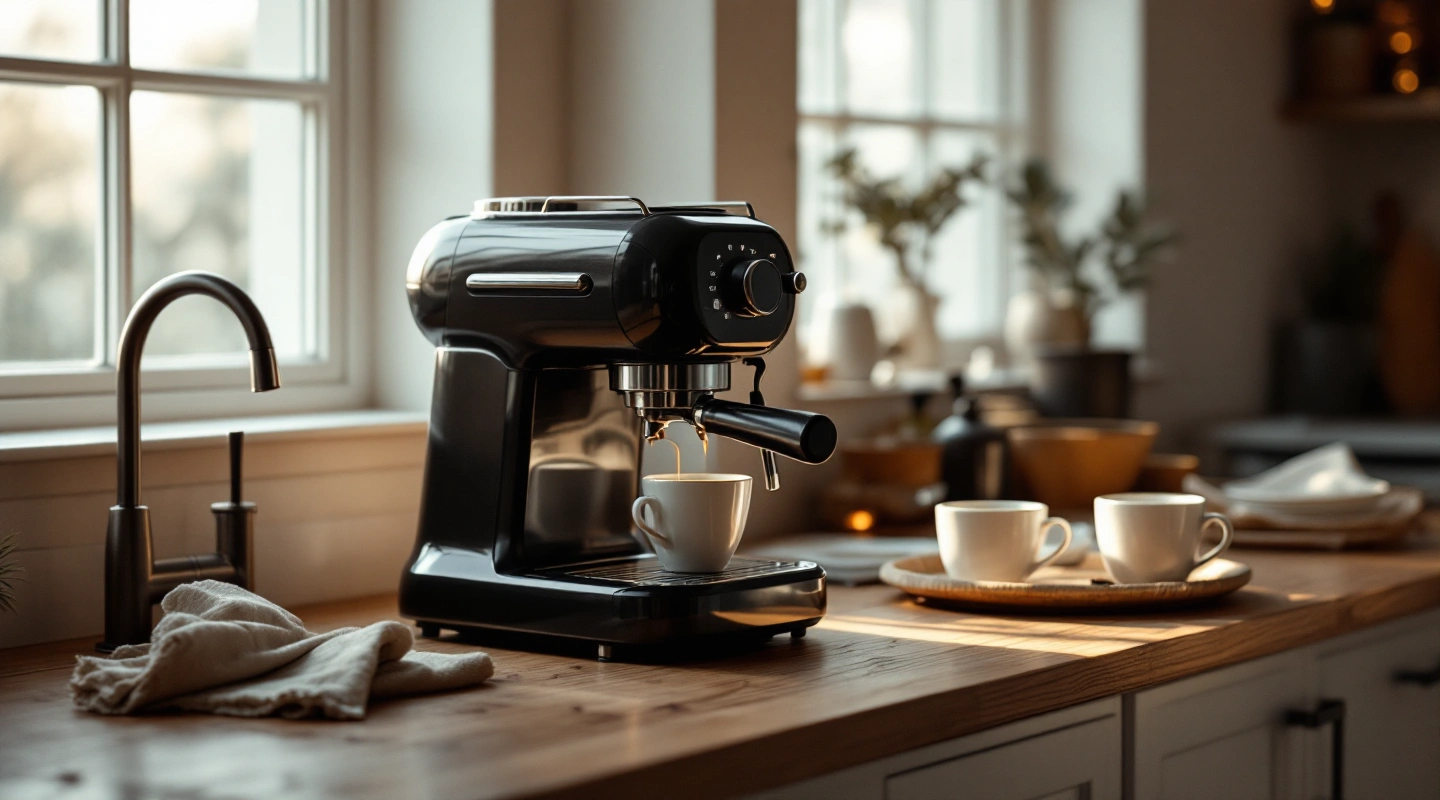
The DeLonghi espresso machine ECP3630 adds a milk-selection ring to a manual coffee and steam routine. Its CAPPUCCINO and HOT MILK positions serve different milk tasks. They do not create automatic milk heat settings or a one-button drink. Choose it if that control serves your drinks and you want to prepare the coffee yourself. Include a separate grinder for whole beans.
Choose the DeLonghi espresso machine ECP3630 if you will use its milk ring and accept the manual coffee stop and steam sequence. Check the exact kit and required extras. Compare the ECP3420 if that ring does not serve your drinks. Compare a documented automatic-milk route if you want heat and texture settings to take on more of the milk work.
DeLonghi espresso machine ECP3630: what the milk ring changes
On the ECP3630, a ring selects the milk setup. The US book gives it CAPPUCCINO and HOT MILK positions. Check for that ring when choosing it over the ECP3420.
The ring changes the milk-device setup. It does not select a target milk heat for an automatic cycle. You still prepare the milk vessel and run the steam process. The phrase advanced cappuccino system does not mean that the machine makes a whole milk drink by itself.
This can suit a buyer who wants those two documented milk routes while keeping a manual process. It may add little for someone who never heats milk. Identify the task before choosing the model for the ring alone.
The ECP3420 shares parts of the instruction book but not every model-specific direction. The ring instructions in that book are marked for ECP3630 only. Keep that distinction clear when a retailer groups several ECP names together.
When HOT MILK is the useful option
If you want warmed milk with less froth than the cappuccino route, read the HOT MILK section of the exact book. It tells you how to set the ring for that task. The user still decides how to combine the coffee and milk in the final cup.
A latte buyer should compare this process with other types of milk equipment. A removable sleeve, manual wand and automatic steam cycle can all be described as frothers. They do not ask the user to do the same work.
The ECP3630 ring does not remove the need for the right vessel or the correct milk level. Allow space for the milk to change as the manual describes. Follow the instructions for placement and hot surfaces rather than guessing from the drink name.
For a shared kitchen, agree which ring position the next person should expect. A machine left in one setup can confuse someone who plans another drink. The visible control should be part of the shared routine, not a hidden reason for a different result.
Read the two ring positions as a choice of milk routine. Check the required vessel and steps for the drink you want. Follow the steam directions alongside the ring setting, since selecting a position alone does not prepare or heat the milk.
When CAPPUCCINO is the route to examine
The cappuccino section gives the ring position and the steam sequence for that drink. Read those steps together. Changing the ring without following the rest of the process does not establish correct operation.
You still need to make the coffee. The ECP3630 does not choose a drink recipe, grind beans and pour milk from a carafe. Its milk feature is part of a semi-automatic routine with user preparation.
Think about the number of drinks you will make. One person making a cappuccino has a different set of tasks from several people changing between coffee and milk drinks. Read the shared manual's sequence for returning from steam to coffee. Include that change in the order of a busy household's drinks.
If you mainly make iced lattes with cold milk, the ring may not take part in the drink at all. Decide whether hot drinks are also frequent enough to make the feature useful. A broader menu is valuable only when it matches the drinks you intend to make.
Keep the steam-to-coffee return in the plan
The ECP book says to cool the boiler after frothing milk before making coffee again. Read that step before you buy. The end of the milk stage does not mean the machine is ready for the next shot.
Picture two different drink orders. In one, all the espresso is prepared before the milk. In another, a person asks for an espresso after a cappuccino is already finished. Follow the manual's sequence and cooling guidance for the order you use.
That step can be part of a deliberate routine. It can also be a reason to compare another heating and control arrangement. It should remain visible in a buying guide instead of being hidden behind a pump-pressure headline.
The ring does not change this return to coffee. It is a milk-device control, not proof of separate simultaneous brew and steam systems. Judge the whole documented sequence rather than assigning a feature to every part of the machine.
DeLonghi espresso machine ECP3630: manual coffee stopping
The user returns the selector to ON to stop coffee delivery. That means the ECP3630 is not a one-button drink machine that weighs and checks the finished beverage. You watch the cup and choose when to finish the flow.
A buyer who wants control over the stopping point may accept that task. A buyer who specifically wants a programmed shot stop should compare that control on another exact model. The milk ring does not add it to the coffee side.
Coffee preparation also remains with the user. Fill the correct filter and follow the manual's tamping steps. An illuminated ready indicator concerns the machine state. It does not confirm the amount or grind of the coffee in the basket.
If you want to learn with recipe notes, choose one clear way to observe the result. A scale can help with a dose and drink output when it fits the setup. Check the cup and scale together under the spouts before treating the space as settled.
The coffee route sets the rest of the shopping list
The shared US book lists one-shot and two-shot coffee filters and an ESE-pod filter. Use the part that belongs to the chosen route. ESE paper pods are different from hard capsules. A pod name on a package is not enough to establish fit.
The manual also lists a combined measuring spoon and tamper. Check it against the exact offered kit before buying a replacement. You can start with the supplied tool when it is present and suits the supported preparation.
Whole beans need a separate suitable grinder. The ECP3630 does not contain one. That is still true when the retail title emphasises cappuccino or premium features. Milk equipment and coffee grinding are different tasks.
If you already own a grinder, verify the intended use and adjustment controls. Do not assume that the brand or a fine setting proves a useful espresso route. The full setup should include the equipment you can actually use for the chosen coffee.
What to inspect before choosing replacement milk parts
The ECP3630 assembly needs its own exact part match. A sleeve or nozzle from another ECP model may look similar without providing the same ring function. Check the full model and compatibility listing rather than choosing from a general family photo.
Keep the original assembly until you know which part needs replacement. A loose small piece is easier to identify when you have the complete original arrangement and the diagrams beside it. Do not discard a seal or insert as though it were packing.
For cleaning, follow the model-specific removal steps and allow the relevant parts to cool. Do not force a hot assembly apart to save time. The milk control is useful only when its parts are clean and fitted as directed.
The ECP3420 guide explains why the shared book does not give every ECP the same milk hardware. Use this distinction when comparing retail offers, not merely when repairing the machine later.
Make the milk area easy to clean
Leave room to move the vessel away from the hot parts and set it down. Then leave a clear route for the care steps. A machine can fit neatly on a counter while the jug and washing tasks remain awkward.
Milk-device cleaning after use differs from descaling the water path. One task cannot stand in for the other. Read the care section while choosing the machine, so the ongoing work is part of the purchase decision.
Use the products and methods that DeLonghi permits for this model. A familiar cleaning habit from a different machine does not establish compatibility. A general claim that parts are easy to clean does not make every part dishwasher-safe.
Give removable pieces a place where they can dry without being lost among other kitchen tools. If several people share the machine, keep the instructions available. Correct reassembly matters to the next session as much as the ring setting.
Compare the complete setup without adding every optional extra
Begin with what the exact offer includes. Account for the coffee filters and handle. Check the preparation tool, then the vessel needed for your milk routine. A staged product photograph is not a complete packing list.
Add a grinder only when the chosen route needs one, but do not leave it out of a whole-bean plan. Keep optional distribution tools or a new handle apart from those required items. This avoids both an incomplete setup claim and an unnecessarily long starting list.
The machine's offer check applies to that exact machine. It does not settle the budget for missing required equipment. If a necessary item has no current evidence, the complete setup remains unconfirmed.
Consider whether the ring solves a real need relative to the other ECP option. A supported milk setting can be a useful reason to choose this model. It is not proof of better espresso taste, greater reliability or a faster complete drink.
Check the US version without guessing at a dimension order
DeLonghi's US ECP3630 specification identifies 120 V and 60 Hz. Match the offered machine's label and intended market to those specifications. A similar family name on an imported unit does not settle its electrical version.
The same page gives a three-number dimensions field without clear axis labels beside the values. Do not assign those numbers to width and depth by guesswork. Ask for an identified dimension drawing or measure the exact offered version when a tight counter fit decides the purchase.
Meanwhile, plan the working access separately. The handle needs a filling area and a clear path into the group. The tray and tank need their own removal routes. A milk vessel has to move away from the hot device to a stable place on the counter.
If preset coffee buttons are more useful to you than the milk ring, compare that route directly. A different coffee stop may address your routine even though the milk work remains manual. Avoid choosing the ECP3630 solely for a feature you will not use.
Frequently asked questions
Is the DeLonghi ECP3630 a good espresso machine?
It suits a buyer who will use the CAPPUCCINO and HOT MILK ring positions while keeping a manual coffee and steam routine. You still prepare the coffee, stop the shot and work with the milk vessel. The ring is not an automatic target-temperature selection. Compare preset coffee buttons or automatic milk settings if those are the tasks you want help with.
Does the ECP3420 have the same ring?
Do not assume so. The shared book marks the selectable CAPPUCCINO and HOT MILK ring directions for ECP3630 only. Keep the exact model beside those instructions when comparing retail titles. Similar-looking milk parts or a shared ECP family label do not prove that another version supplies this control. Check the correct diagram and offered assembly.
Will the ECP3630 stop my shot at a programmed volume?
The documented coffee process uses the selector dial. The user returns it to ON to stop delivery. A milk ring does not add a programmed coffee stop. Keep the dial visible and in reach while watching the cup. Choose another exact model if a saved shot volume is essential to the routine you want.
Is a separate grinder required?
A whole-bean route needs one because the stock ECP3630 has no integrated grinder. The shared manual also describes ground-coffee filters and an ESE-pod filter. Choose the coffee route before deciding which equipment is required. A qualifying machine offer does not establish the total for a grinder and any other required parts that you still need.
Does the milk ring avoid the cooling step before another coffee?
No such change is established by the ring. The ECP instructions describe cooling the boiler after milk frothing before coffee is made again. Keep that step in the drink order you plan. The ring changes the milk-device setup. It does not prove simultaneous brew and steam operation or a separate heating system for each task.
Can I clean the milk device just by descaling the machine?
No. Milk-device cleaning after use and descaling the water path are separate tasks in the instructions. Follow the model-specific removal and cooling precautions for the milk parts. Keep small pieces identifiable so they can be fitted correctly again. A clean water path does not establish that milk residue has been removed from the sleeve or nozzle.
Verdict
Choose the DeLonghi espresso machine ECP3630 if you will use its milk ring and accept the manual coffee stop and steam sequence. Check the exact kit and required extras. Compare the ECP3420 if that ring does not serve your drinks. Compare a documented automatic-milk route if you want heat and texture settings to take on more of the milk work.