



This Gaggia Classic Pro vs Breville Bambino guide compares two manual milk routines. The Classic E24 uses a boiler and a brew switch. The Bambino BES450 has its own heater and shot buttons. Choose by the tasks you want to do. Include the required grinder and milk equipment when comparing the complete setups.
For Gaggia Classic Pro vs Breville Bambino, choose by the controls you want. The Bambino offers its compact shot-button routine with manual milk work. The exact E24 offers a manual brew and boiler sequence. Both leave grinding and milk preparation to the user. Resolve the Classic version before comparing internal parts.
Gaggia Classic E24 RI9380/46
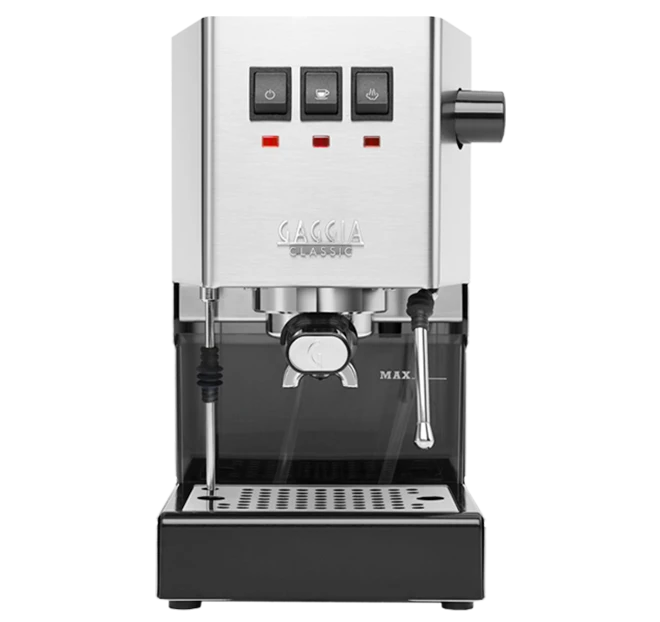
Gaggia Classic E24 RI9380/46 Gaggia Classic E24 RI9380/46
Our verdict:
Model reference: outside budget
Outside this budget: the US maker lists the E24 from $549. It is not an under-$500 recommendation.
Keep in mind: Steam-to-coffee work includes a cooling sequence. It has no automatic milk settings or integrated grinder.
Outside this budget: the US maker lists the E24 from $549. It is not an under-$500 recommendation.
View at GaggiaBreville Bambino BES450
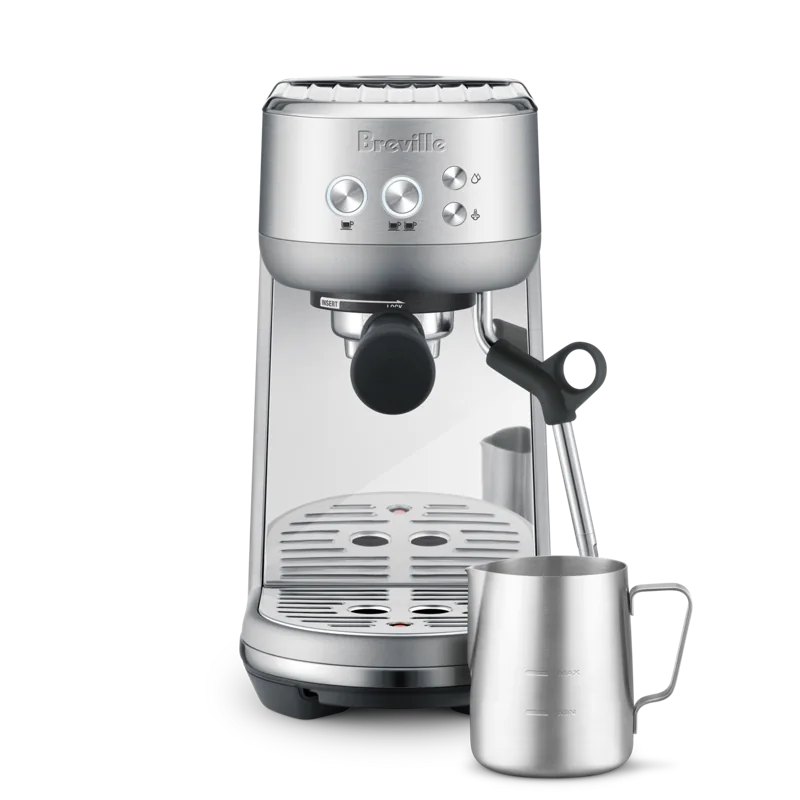
Breville Bambino BES450 Breville Bambino BES450
Our verdict:
For manual milk work
Choose the BES450 for its manual milk process and separate coffee preparation. Follow the supplied basket route before adding tools.
Keep in mind: It has no automatic milk heat or texture settings. Whole beans need a suitable separate grinder.
New US offer below $500 before tax and shipping; checked 31 October 2026.
View at BrevilleGaggia Classic Pro vs Breville Bambino: which controls suit you?
The Classic here is the E24. The Breville is the standard Bambino BES450. E24 boiler facts do not apply to every Classic. The Plus's milk settings do not apply to the BES450. Keep the full model codes with the offers.
The main decision is how you want to operate the machine. A manual switch and preset button ask for different stopping actions. Choose the one you want to use, then check the basket route and care steps. Boiler material alone does not settle those user choices.
The Bambino's shot buttons leave work to the user
Breville's manual shows the shot-button process and how its settings work. That gives you a defined way to start brewing. It does not measure the dose in the basket or inspect the grind. Those steps still need a user and, for whole beans, a grinder.
The buttons also do not weigh the drink that lands in the cup. If your recipe uses a target output by mass, you need a way to observe it. A scale is one way to keep such notes. Check that it fits with the cup under the spouts.
You may want to prepare coffee by hand and use shot buttons to start delivery. The Bambino offers that split. It is still a semi-automatic routine. You should expect to fill the tank, prepare the handle and clean the coffee parts.
Do not confuse this standard model with the Bambino Plus. The BES450 milk process is manual. If selectable automatic milk temperature and texture are part of your buying requirement, this is the wrong Bambino to choose for that reason.
The Classic's brew switch makes stopping part of the job
The E24's manual brew process puts the start and stop in the user's routine. Plan how you will decide when the shot is finished. That may mean following a recipe with time and output notes rather than waiting for a preset shot button to finish.
This can suit someone who wants each brewing stage to remain visible. It can also add a task a buyer would rather hand over. Manual control is a preference and a responsibility, not evidence of better flavour.
If several people use the Classic, keep the recipe and stopping rule clear. One person may judge by a scale while another waits for a fixed amount of time. Those are different processes. Agree on the intended method before drawing conclusions from inconsistent cups.
The same care applies when changing beans. Do not adjust the dose, grind and output at once if you want to understand the change. A familiar brew switch does not remove the need for useful recipe notes.
Both ask you to learn manual milk
Neither stock machine in this comparison selects milk heat and texture for an automatic wand cycle. You prepare the jug, position the wand and follow the model's steaming steps. That is a clear shared limit for a buyer who wants help with milk.
The operating sequence differs between the machines. Read the steam steps in each manual rather than copying a general latte video. Controls, ready states and the return to coffee belong to the exact machine.
The E24 manual includes lowering the boiler temperature after steaming. That matters when the next drink needs coffee. A household alternating milk drinks and espresso should understand that step before choosing the machine.
The BES450 has its own purge and milk instructions. The ThermoJet name does not mean every stage needs no preparation. Follow its ready indicators and sequence. Do not use the Plus's automatic-milk instructions as a substitute.
If learning to steam is appealing, either manual route may fit that interest. Choose between their controls and equipment needs. Plan the jug movement and care after use, along with the next coffee stage. That makes the comparison about the tasks you will repeat for the drinks you make most often.
What the heater descriptions actually establish
Gaggia's current E24 page identifies a brass boiler. Breville describes the BES450's ThermoJet heating system. These facts establish different designs. They do not provide a measured comparison of cup temperature or complete drink time.
The Classic's boiler sequence deserves attention because it changes between brew and steam tasks. Read the exact US E24 procedure. An old Classic guide may refer to another version or care routine. Keep the manual tied to the machine you will receive.
The Bambino's heating claim concerns the system reaching its ready state. It does not include grinding, dosing, tamping, cup preparation or cleanup. Do not treat a heater headline as the time from entering the kitchen to drinking a latte.
If speed is central to the purchase, write out your whole drink sequence. Include how many drinks you make and when milk enters the process. Keep preparation and cleanup in that plan. A heater-ready claim covers a different scope from all the work required to serve those drinks.
Keep temperature and durability claims separate from the control choice. A material or heating method describes part of the design. It does not establish the condition of an offered unit or the result of your drink preparation. Start with the stock controls you want, then confirm the exact version and kit.
Pick the coffee route before buying the grinder
The BES450 US book distinguishes single-wall and dual-wall baskets. It directs fresh-ground and pre-ground coffee to the relevant route. The E24 book describes Crema Perfetta with a frothing jet device and a separate arrangement for traditional baskets.
Those choices affect the equipment needed to start. Whole beans through the single-wall or traditional route call for a suitable espresso grinder. Neither machine has one built in. Settle that requirement before spending the whole equipment budget on the machine.
A supported pre-ground route has a different starting list. It still needs the correct basket and related parts. Follow the manual rather than assuming that any coffee labelled espresso will behave the same way.
On the Classic, keep the jet device with the basket arrangement that uses it. Traditional baskets follow another diagram. Leaving a small insert in place by habit can put the wrong parts together. The manual, not the similarity of the baskets, decides the arrangement.
On the Bambino, a shared handle does not make the single-wall and dual-wall baskets the same tool. Changing the basket can change the grind and preparation needed. Treat that change as a new recipe setup rather than keeping every old setting by default.
Existing parts can affect the choice, but verify them
If you already have verified Classic accessories, that may make the E24 route easier to plan. Check the part against the current machine, not merely the family name. A new generation or a third-party handle can still need a separate fit check.
The nominal 58 mm Classic and 54 mm Bambino systems are different. Their numbers help narrow a search. They do not make every same-size handle fit every machine. Tabs, rims, basket depth and locking geometry remain relevant.
A tamper must suit the basket opening in use. A tool that is too narrow may leave an edge it does not press. A tool that is too wide may not enter the basket. A nominal handle size is a starting point, not an exact tamper-fit result.
Keep the supplied equipment until you know what a replacement needs to solve. A new handle or distribution tool is not required merely because another owner uses it. Start with the supported coffee route and add a part for a clear purpose.
For exact fit references, use our Bambino portafilter guide and Classic portafilter guide. Neither guide treats diameter alone as proof of full compatibility.
Counter space should include the complete routine
The standard Bambino is worth considering when its compact form suits the available space. Measure the intended position and the access you need. A machine's case fitting on the counter is only the first check.
Both routes may add a grinder. Milk drinks add a jug and space to use it. Preparing the basket needs a stable working area. Those tasks can occupy more space than a front-on machine photograph suggests.
Check the tank refill route and tray removal route on the exact model. Cupboards, nearby appliances and wall sockets can change how practical the location is. Do not choose a placement that requires moving hot equipment for each small care task.
Check your cup and scale as a pair if you plan to weigh output. Tall glasses can need another serving process. The fact that a small espresso cup fits does not establish room for every drink vessel.
The best layout is one you can use and clean without awkward reaches. That is a more concrete space comparison than a claim that either machine is suitable for every small kitchen.
Compare machine eligibility with setup completeness
The checked offer is an exact machine candidate. A qualifying machine does not prove that a whole-bean setup meets the same budget. If you still need a grinder or another required tool, the complete setup needs more evidence.
List what the offer includes, then list what your chosen drink route requires. Match the two lists item by item. A tamper pictured beside a machine is not included unless the offer says so. A missing grinder is not free simply because it is absent from the machine price check.
Keep optional upgrades separate from required parts. This avoids both understating the starting needs and adding every accessory as though the machine cannot work without it. The right starting list follows the manual and your coffee route.
A buyer who already owns the required equipment has a different starting position from a buyer with an empty counter. List what is already suitable for the intended coffee route and what still needs buying. Include each missing essential before comparing complete setups. Unknown required costs stay unresolved.
For mostly black coffee, compare the coffee-stop action first
If most of your drinks contain no milk, start with the coffee control. The steam wand may carry little weight. On the Classic E24, ending coffee delivery is part of the brew-switch task. The Bambino offers programmed coffee buttons. Its own book explains how they work and how to adjust them.
Those are different actions to live with. One buyer may want to decide when to stop each coffee. Another may prefer the button routine. Neither preference establishes that the machine has measured a correct recipe for the coffee in the basket. The preparation still needs attention on both routes.
For a longer black drink, plan the water step separately from the espresso step. Check the exact machine's hot-water instructions and the cup arrangement. Measure your preferred vessel and allow room to move it after filling. The machine's nominal body width does not establish clearance for every mug or the working area around it.
Milk still matters if another person occasionally makes a cappuccino. They would use a manual jug process on either stock machine. Follow the instructions for returning from steam to coffee rather than treating the next black coffee as the same step on both models.
This approach keeps a rarely used wand from deciding the purchase by itself. Choose the machine whose documented coffee routine fits the drinks you actually make, then account for the grinder and other required equipment.
Keep the first recipe tied to one route
Choose the basket before you copy a recipe. Write down which parts are in use and which coffee you chose. If a second person changes the basket, keep that change clear in the notes. A setting that worked with one route is not proof that all parts can be swapped without thought.
Keep the supplied parts until you know what a new tool needs to do. That makes a later fit check easier. It also keeps a whole-bean grinder need from getting lost in a list of optional parts.
Read the brew sequence before choosing a control style
Compare the shot-button instructions in the BES450 US manual with the manual brew-switch sequence in the E24 US RI9380 manual. Think through how you would prepare the basket, stop the coffee and move to milk. That is a more useful choice than treating every machine called semi-automatic as though it handles those tasks in the same way.
Match the selected coffee route to the equipment you can supply. A stock basket, a deeper replacement and a different handle can bring separate preparation or fit questions. Keep the original parts until a proposed change has a clear purpose and a complete match. Choose between the machines for the stock controls you want to use first.
Choose the Bambino when its shot-button process and manual milk routine match your needs. Choose the E24 when you want its manual brew and boiler sequence and have resolved the exact version. Read the Bambino review or Classic review for the care and kit details behind that choice.
Frequently asked questions
Are both machines manual for milk?
Yes, for the exact stock models here. The Classic E24 and standard Bambino BES450 use manual steam and jug routines. The automatic milk settings of the Bambino Plus do not apply to the standard Bambino.
What is the main brew-control difference?
The Classic uses a manual brew-switch process. The Bambino uses shot buttons with the options described in its manual. Neither control weighs the dry coffee or checks the grind for the user.
Can I use the same handle on both machines?
Their nominal systems differ: 58 mm for the Classic and 54 mm for the Bambino. Do not treat their handles as interchangeable. Check the exact model and part, including locking tabs and basket depth, for any replacement.
Does the E24 boiler prove it makes better coffee?
No. The brass-boiler specification identifies the E24 design. It does not settle how you will prepare the coffee or manage the milk. Compare the operating steps and equipment needs together. Choose the controls for the routine they support, rather than treating one material as proof of the final drink's quality.
Can I call either offer a complete setup?
Only after every required item for the chosen coffee route is accounted for. A whole-bean route needs a suitable grinder, and milk drinks need the relevant equipment. A qualifying machine offer alone does not confirm the full setup.
Verdict
For Gaggia Classic Pro vs Breville Bambino, choose by the controls you want. The Bambino offers its compact shot-button routine with manual milk work. The exact E24 offers a manual brew and boiler sequence. Both leave grinding and milk preparation to the user. Resolve the Classic version before comparing internal parts.