
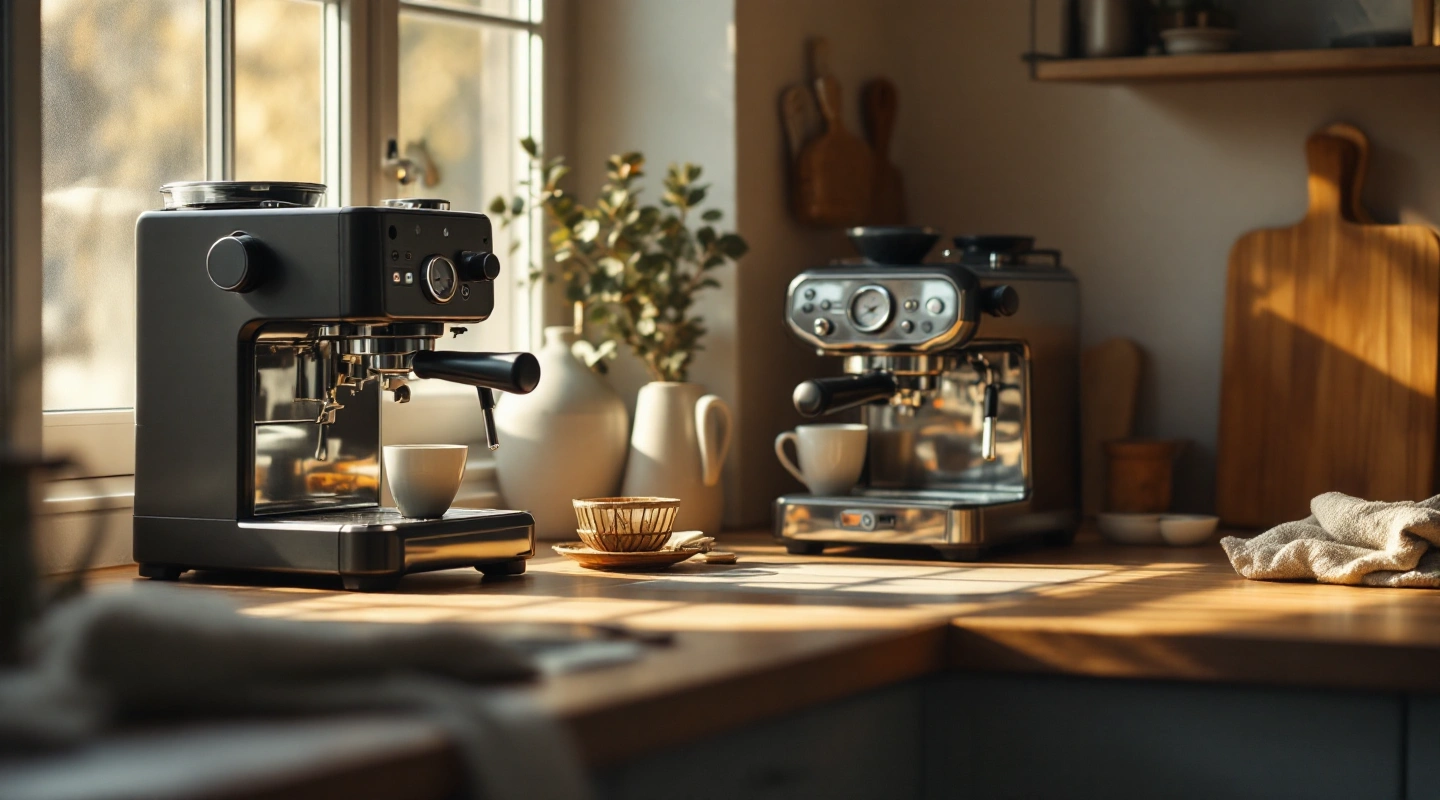
The espresso maker vs espresso machine distinction is not a fixed technical boundary. Shops use both names for pump machines, while “espresso maker” can also describe a stovetop moka pot or a manual brewer. Compare the brewing method and the work required, rather than assuming the name tells you what is inside.
A pump espresso machine forces heated water through a prepared coffee puck. A moka pot is a different pressure-driven stovetop process. A manual lever uses another mechanism again. The word maker can cover more than one of these. Check the exact device, its heat source and coffee format before comparing drinks, milk features or full setup cost.
Espresso maker vs espresso machine: what the names hide
There is no useful shopping rule that a maker is small and a machine is large. Nor does one word prove that a product needs electricity. Retail naming varies. A page title may use espresso maker simply as another term for espresso machine.
The first useful question is how the device moves water through coffee. Is there a pump, a lever or a heated lower chamber? The next question is what grounds or capsules it accepts. Those facts lead to a clearer comparison than the noun on the box.
Do not assume all strong small coffees are identical. Brewing method, serving size and recipe differ. If you want the workflow of a cafe-style portafilter machine, a general “espresso maker” search may include devices that solve a different task.
Match the instructions to the brewing method
The National Coffee Association's espresso reference describes the pressure-brewing method and its machine categories. The Breville BES450 US manual provides a documented pump-and-portafilter workflow.
For a stovetop device, the exact manufacturer's instructions govern the whole process. Read them before filling or heating it. Do not use pump-machine basket instructions on a moka pot.
Espresso maker vs espresso machine method table
| Device meant by the label | Heat and pressure method | Coffee task | Milk check |
|---|---|---|---|
| Pump portafilter machine | Electric heat system and pump | Prepare basket and lock handle | Wand or other system only if included |
| Manual lever brewer | User or spring mechanism; heat source varies | Prepare the stated basket or chamber | Often a separate task; check model |
| Moka pot | Heat drives water from lower chamber through coffee | Fill the maker's funnel as directed | Separate milk tool in the usual setup |
| Capsule machine | Built-in system for a specific capsule format | Insert a compatible capsule | Exact model may add milk features |
| Bean-to-cup machine | Built-in grinder and brew system | Fill beans and choose a drink | Check the exact milk process |
Scroll for more →
These rows are method descriptions. They do not imply that all devices in a row have the same capacity. Cleaning needs differ too. Use the manual for any numeric claim.
A pump machine gives you a basket workflow
The usual portafilter process involves a basket of grounds, a level tamp and a locked handle. A pump supplies water through the coffee. Depending on the controls, the user or the machine ends the shot.
Basket design matters. A pressurized basket can serve a different grind supply from a single-wall basket. You need to know which basket comes with the machine before you decide that pre-ground coffee or a particular grinder will suit it.
A steam wand, if supplied, adds another task. It does not use the coffee basket to foam milk. Read the brew-to-steam sequence before you plan a run of milk drinks. A single heating system may need a different state for each task.
A moka pot is a separate brew method
A moka pot heats water in a lower chamber and sends it through a coffee funnel into an upper chamber. It can make a concentrated drink for its own style of serving. That does not make its process identical to a pump espresso shot.
Do not tamp the funnel by copying a portafilter routine. Bialetti's Moka Express instructions say to leave the coffee loose and keep water below the safety valve. Do not alter the fill level or heat source based on an espresso ratio from another method. Read the exact maker's instructions, including the safety-valve and opening rules.
Let the device reach the safe state described in its manual before opening it. Hot surfaces and remaining pressure need care. A strong coffee taste is no reason to improvise a pressure adjustment or block a safety part.
If this is the method you enjoy, compare it on its own merits. You may prefer its small number of parts or its stovetop routine. You do not need to call it the same drink as pump espresso to decide it suits your kitchen.
A manual brewer needs an exact mechanism check
Manual can mean a lever or another hand-driven process. Some systems need hot water from a kettle. Some have a heater. Some apply pressure directly through the user; others use a spring.
Include those differences in the setup list. A device without a built-in heater is not a complete hot-water system. A brewer without a wand does not cover milk texture. Portability also depends on the heat source and grinder, not just the brewer's case.
Our manual versus automatic comparison compares those tasks in detail. Use it after you have confirmed that the candidate really is a manual-pressure design.
Compare the drink you actually want
List whether you want a small espresso, a longer coffee or a milk drink. Then identify the steps to get there. A device that makes a base you like can still be the wrong fit if it needs several extra tools for your normal drink.
For an Americano-style routine, check how you obtain hot water and how the final drink size fits the cup. For milk drinks, check heating and texture. Do not assume a frother always heats milk or that hot milk always has pourable microfoam.
Avoid a category-wide taste verdict. Coffee, grind, water and recipe all influence the drink. Claims such as “richer” or “cafe quality” need a defined basis. Choose the brewing method for the routine and drink it supports, then adjust the coffee recipe within its instructions.
Count equipment beyond the headline device
Make two totals. One covers the device itself. The other covers the equipment you need to make your intended drink. Put any required grinder in that second total. Add a heat source or milk tool there when the method needs it.
Mark what you already own and whether it suits the new job. A grinder that works for a coarser brew method may lack the control you need for an open espresso basket. Confirm intended use from the grinder's maker before counting it as solved.
Keep optional extras apart. A display stand, spare handle or extra cup set can be enjoyable without being necessary to start. Our homepage buying guidance uses the same machine-only and complete-setup distinction. Check the complete list against current offers before buying equipment.
Counter space includes access and cleanup
Measure more than width. Check lid clearance, tank removal and room to turn a handle. A separate kettle or grinder may take more working space than the brewer itself. Leave somewhere safe to set hot parts.
Storage is a separate question from use. A small manual brewer may fit in a drawer but still need a clear surface for each session. A larger automatic machine may stay on the counter while requiring space to remove its waste tray.
Plan a place to rinse and dry the parts. Do not assume a metal basket is dishwasher-safe because it looks sturdy. Finishes, seals and handles have their own care instructions. Follow the exact manufacturer rather than the generic category.
Read a product listing in a useful order
Start with the model code and market. Next, find the manual and the brewing mechanism. Then check the accepted coffee format, heat source, included basket and milk process. Read dimensions and care before turning to extras.
If a listing omits one of those basics, leave it unresolved. Do not fill the gap from a similar-looking machine. An exact name can cover several bundles. Their included tools and power details may differ.
Use current manufacturer information to confirm a device is sold in your market. For a budget shortlist, current new-offer eligibility is another check. An old indexed price or a used listing cannot establish that the exact new US model fits the ceiling today.
Before buying, write down what you already own for the chosen brewing route. Include the heat source and coffee tools. Then check the exact kit contents for missing parts.
Frequently asked questions
Is espresso maker just another name for espresso machine?
Sometimes. It can also describe a different type of brewer. Read the mechanism and manual.
Is a moka pot a pump espresso machine?
No. It uses a different heated-chamber process. Follow its own filling and safety instructions.
Does a machine always include a grinder?
No. Check the exact configuration. A portafilter system can require a separate grinder even if it has automatic shot controls.
Can I compare cost by the brewer alone?
Only if the required equipment is already the same. Otherwise list the missing grinder, heat source and milk tools separately.
Verdict
The espresso maker vs espresso machine label does not settle the purchase. Compare the pressure method, coffee format, heat source and milk routine. Count the complete kit and follow the exact manual. The machine types guide maps those choices without relying on a shop's naming convention.